

CBN and CBG are two of the most talked-about cannabinoids in the hemp market. Because the names look so similar, many shoppers assume they’re interchangeable. They aren’t. The CBN vs CBG comparison is really about two compounds at opposite ends of the cannabis plant’s chemical life cycle: one forms at the very beginning, the other forms as THC ages.
This guide explains what’s the difference between these two cannabinoids, how each is made, how they compare to CBD and CBC, how they interact with the endocannabinoid system, and what to check before buying. It makes no claims about health effects. Neither compound has been evaluated or approved by the FDA to diagnose, treat, cure, or prevent any condition.
What Is CBG (Cannabigerol)?
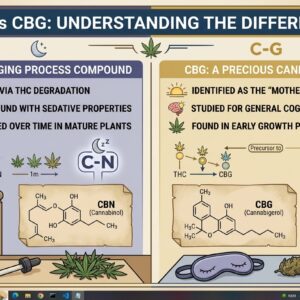
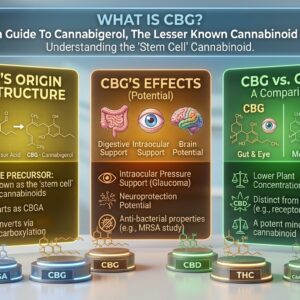
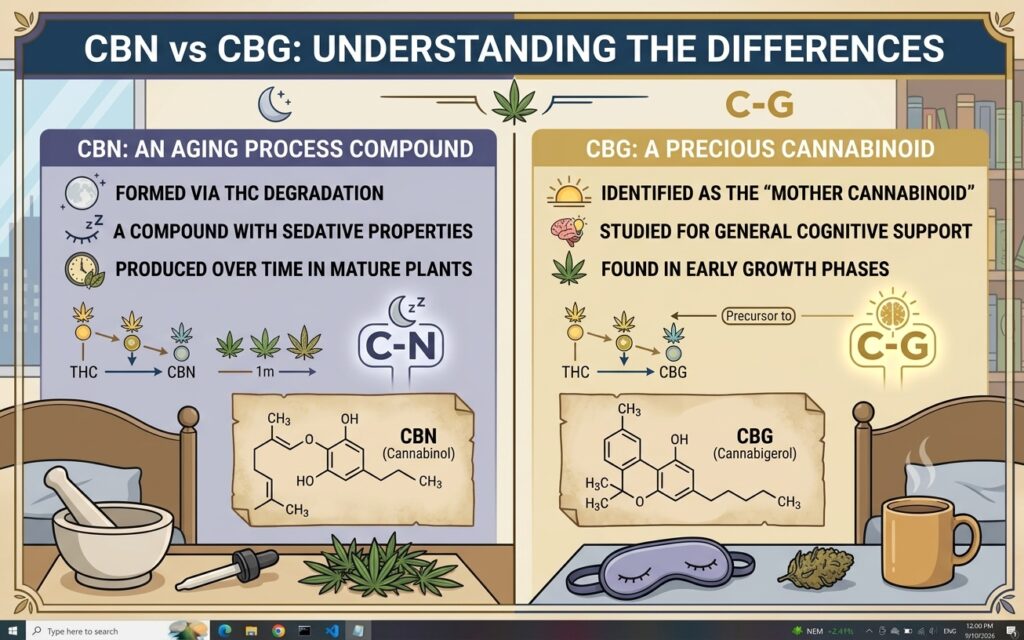
Cannabigerol is often called the “mother of all cannabinoids.” That nickname comes from its role in how the cannabis plant builds its chemistry:
The plant first produces cannabigerolic acid, or CBGA.
As the plant matures, enzymes convert most of that CBGA into other acidic cannabinoids, including THCA, CBDA and CBCA.
When the remaining CBGA is exposed to heat, a process called decarboxylation, it becomes CBG.
Because CBGA is the precursor to other cannabinoids like CBD, THC and CBC, very little remains in a mature plant, often less than one percent. To make these products practical, growers have bred hemp varieties that retain more CBGA, and some harvest earlier in the growth cycle before most of the conversion happens.
CBG is often sold as an isolate, a white crystalline powder. It also appears in smaller amounts in full-spectrum hemp extracts. Researchers Yehiel Gaoni and Raphael Mechoulam first isolated cannabigerol in 1964.
What Is CBN (Cannabinol)?
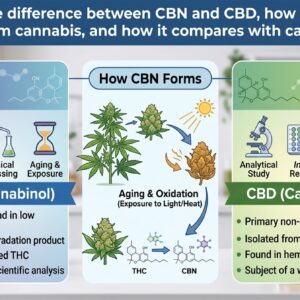
Cannabinol sits at the other end of the process. It isn’t produced directly by the plant’s enzymes. Instead, it forms when THC breaks down over time. The main factors are:
Exposure to oxygen
Exposure to heat
Exposure to light
Age and storage conditions
This is why older or poorly stored cannabis material tends to contain more of it. Commercially, CBN is often produced by converting other cannabinoids in a lab rather than waiting for natural degradation, since that process is slow and unpredictable.
It also has a notable place in history. Cannabinol was the first cannabinoid ever isolated, in the late 1890s, and its chemical structure was clarified in the 1940s.
CBG vs CBN: Key Differences
If you want the short answer on CBG vs CBN, it comes down to origin. Here are the main differences:
Starting point: CBG comes from CBGA. CBN comes from THC, by way of THCA.
Stage of the life cycle: One is a precursor that forms early. The other is a breakdown product that forms late.
Relationship to THC: CBG is not derived from THC. THC and CBN are directly linked, which matters for testing and regulation.
Production method: CBG is usually extracted from specially bred hemp. CBN is often made through conversion.
Natural abundance: Both are minor cannabinoids found in small amounts, but for different reasons. CBGA gets converted into other compounds, while CBN only builds up as THC degrades.
Market positioning: CBG is more commonly found in daytime-positioned products. CBN tends to appear in evening-positioned products.
How CBG and CBN Form in the Cannabis Plant
It helps to picture the process as a timeline:
Early growth: The plant produces CBGA, the starting point for its cannabinoids.
Maturity: Most CBGA converts into THCA, CBDA and CBCA.
Harvest and processing: Heat turns acidic cannabinoids into their active forms, including THC, CBD and CBC.
Aging: Over time, THC exposed to air, heat and light slowly converts into cannabinol.
In other words, CBG and CBN are connected through THC. CBGA helps create THC, and THC eventually becomes CBN. That’s why these two are so often compared, even though they’re chemically quite different.
CBD – Cannabidiol: How It Compares to CBN and CBG
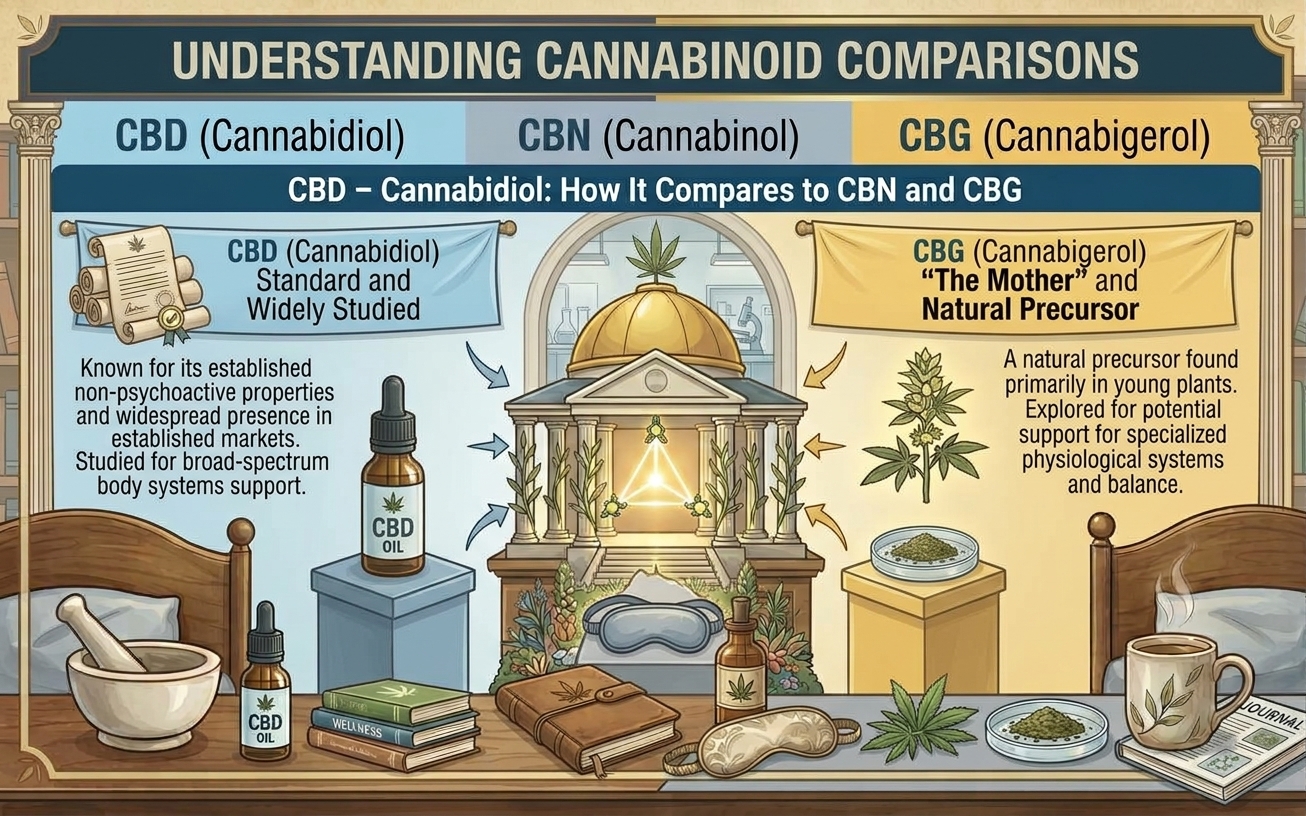
Since many shoppers see CBN and CBG sold alongside CBD, it’s worth understanding where cannabidiol fits in.
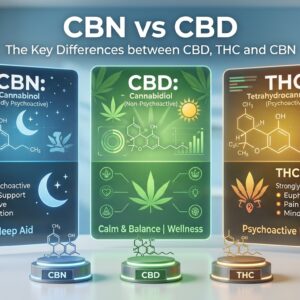
CBD is the most widely known cannabinoid and usually the most abundant one in hemp. It forms when CBDA, made from CBGA, is heated. Although CBD comes from the same parent compound as THC, the two have different chemical structures, and CBD is not generally considered intoxicating.
CBD is widely available, and research on CBD is far more extensive than research on either minor cannabinoid. The FDA has approved one prescription drug containing purified CBD, which is one reason the agency does not allow CBD to be added to foods or sold as a dietary supplement.
CBG vs CBD
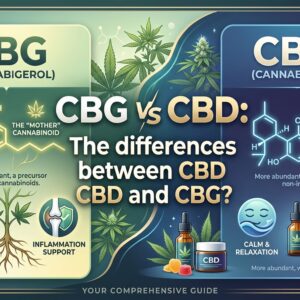
The difference between CBD and CBG mostly comes down to abundance and timing:
CBD and CBG both come from the CBGA pathway without involving THC.
CBD is plentiful in mature hemp, while CBG is scarce.
CBG is the parent compound, while CBD is one of its products.
Shoppers deciding between CBD or CBG products will usually find CBD in far more formats and at lower prices, simply because there’s more of it in the plant.
CBD vs CBN
Comparing CBD and CBN shows a different relationship:
CBD forms directly from CBDA in the growing plant.
CBN forms from THC after harvest, as the plant material ages.
CBD and CBN have no direct chemical link, but both are sold as hemp-derived ingredients.
CBD vs CBG vs CBN in Products
Brands often combine cannabinoids rather than selling one on its own. A few common patterns:
CBD is often used as the base of a formula, with CBG or CBN added in smaller amounts. CBN is often paired with CBD, and relatively few brands sell CBN alone.
CBG also appears as a standalone isolate, as well as in blends.
Some full-spectrum products contain CBD, CBG, CBN and CBC together in varying amounts.
Like CBN and CBG, CBD products cannot legally carry health claims.
CBN and CBC: Another Minor Cannabinoid Comparison
CBC, or cannabichromene, is another minor cannabinoid that often comes up in the CBN vs CBG conversation. Here’s how it compares:
CBC primarily forms from CBGA while the plant is growing, making it a sibling of CBD and THC.
CBC also shows up in lower amounts than CBD in most hemp.
CBN builds up after harvest, while CBC forms during growth.
CBC is usually found in full-spectrum blends, while CBN is more common as an added ingredient.
CBC was identified in 1966 and has received less attention from researchers and brands than either CBG or CBN.
How CBN and CBG Interact With the Endocannabinoid System (ECS)
The endocannabinoid system, or ECS, is a signaling network that scientists began mapping in the 1990s. It includes:
CB1 receptors: Found mostly in the brain and central nervous system.
CB2 receptors: Found mostly in immune cells and peripheral tissues.
Endocannabinoids: Compounds the body makes itself, such as anandamide and 2-AG.
Enzymes: These build and break down endocannabinoids.
Research into how plant cannabinoids interact with the body’s endocannabinoid system is ongoing:
THC binds directly to the CB1 receptor.
CBG has been studied for binding to both CB1 and CB2 receptors.
CBN binds to CB1 and CB2 receptors more weakly than THC does.CBD interacts with the ECS mostly indirectly and shows low affinity for CB1 and CB2 receptors.
CBC has been studied for its activity at receptors outside the CB1 and CB2 family.
Much of this research comes from lab and animal studies. It describes how molecules bind to receptors, not proven effects of cannabinoids in people.
What Is the Entourage Effect?
The entourage effect is a theory proposing that cannabinoids combined with other cannabinoids and terpenes may behave differently than a single isolated compound. It’s the idea behind many full-spectrum products that contain CBD, THC, CBG, CBN and CBC together.
The entourage effect remains a hypothesis. It has not been established by the FDA, and brands cannot use it to support health claims.
Are CBN or CBG Approved for Sleep or Relaxation?
This is one of the most searched questions about these two cannabinoids, so here’s a clear answer: no. The FDA has not approved CBN, CBG, CBD or CBC for sleep, relaxation, calm, wellness, pain relief, inflammation or any other health purpose.
Under FDA rules, hemp brands cannot legally:
Market these products as a sleep aid or for relaxation and sleep
Describe them as anti-inflammatory or claim to address inflammatory conditions
Claim they provide pain relief or help manage chronic pain
Promote them as promoting calm or general wellness in a way that implies a health effect
What can be said is that CBN is often found in products positioned for evening routines, while CBG and CBD are more commonly positioned for daytime use. These are marketing and branding trends, not FDA-recognized differences.
If you have questions about sleep or any health concern, speak with a licensed healthcare provider. This is especially important if you take medication, are pregnant or nursing, or have an existing medical condition.
Legal Considerations for CBN and CBG
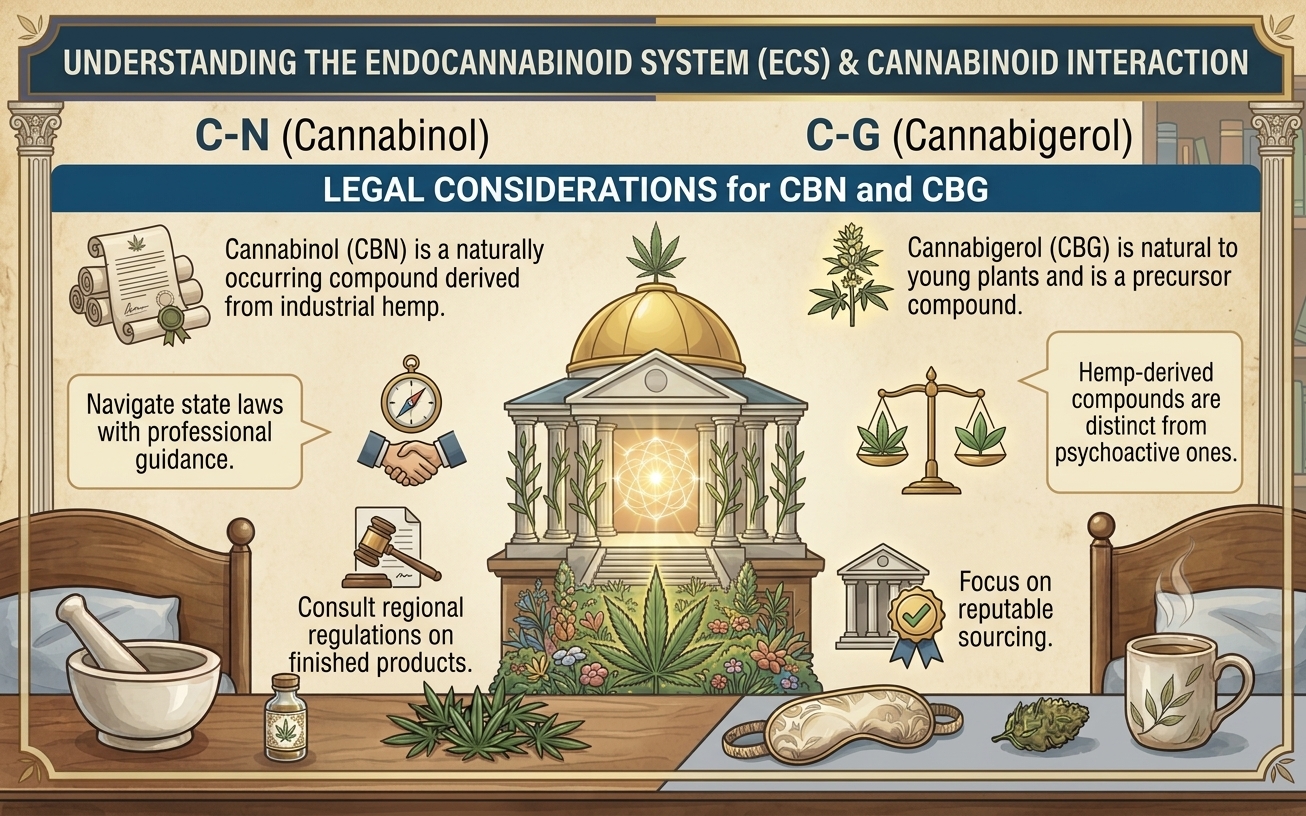
The 2018 Farm Bill defined hemp as cannabis containing no more than 0.3% delta-9 THC on a dry-weight basis. That definition opened the door for hemp-derived cannabinoids across the United States.
The rules have continued to shift since then:
Federal hemp ruleshave been updated, including changes affecting cannabinoids made through conversion and limits on total THC content. Because CBN is often produced by conversion, it may be more affected than CBG or CBD.
State laws vary widely, and some states restrict or ban certain hemp-derived cannabinoids.
The FDA does not permit cannabinoids like CBD and THC to be added to foods or sold as dietary supplements.
Always check current federal and state rules by clicking here.
What to Look for When Buying CBN, CBG or CBD Products
Whether you’re comparing CBG vs CBN products or exploring CBD for the first time, the same quality checks apply:
Certificate of Analysis (COA): Look for recent, third-party lab testing that lists every cannabinoid in the product.
THC content: Because THC and CBN are linked, check the COA carefully for THC levels. Some drug tests may detect related compounds.
Contaminant testing: Good COAs also cover heavy metals, pesticides, residual solvents and microbes.
Clear labeling: The label should state the amount of each cannabinoid per serving and per container.
No health claims: Be cautious of brands promising health outcomes. That’s a compliance red flag.
Batch numbers: These let you match the product in your hand to its lab results.
CBN vs CBG: Final Thoughts
The CBN vs CBG comparison isn’t about which is better. It’s about understanding what each compound actually is. CBG is the early-stage precursor that gives rise to CBD, THC and CBC. CBN is what THC becomes as it ages. They share a family tree but sit on very different branches.
As interest in minor cannabinoids grows, careful shopping, reading lab reports and following changing laws matter more than ever. For any health question, a qualified healthcare professional is always the best resource.
Educational and Regulatory Disclaimer
This article is for educational and informational purposes only and is not medical advice. It does not recommend a dose or claim that a dietary supplement or CBD product diagnoses, treats, cures, mitigates, or prevents any disease. Dietary-supplement structure/function and general-well-being claims must be truthful, non-misleading, and substantiated; a disclaimer does not replace adequate evidence.3 Consult a qualified healthcare professional before using a dietary supplement, especially if you are pregnant or nursing, take medication, have a medical condition, or are considering a high dose.
These statements have not been evaluated by the Food and Drug Administration. This product is not intended to diagnose, treat, cure, or prevent any disease.