

If you have spent any time looking at CBD products, you have likely come across the term “hemp extract.” It appears on product labels, in ingredient lists, and across marketing materials. But what does it actually mean?
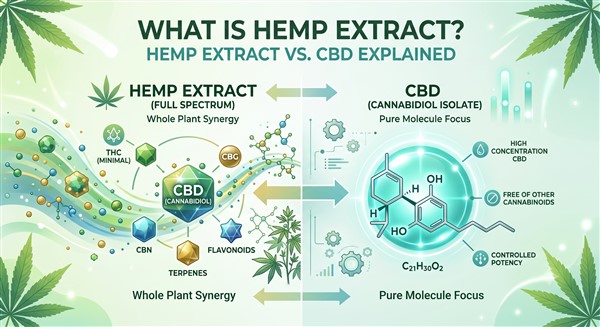
The short answer is that hemp extract is the substance obtained from the hemp plant, specifically from its flowers, leaves, and stalks. It contains a range of naturally occurring compounds, including cannabinoids, terpenes, and flavonoids. CBD, cannabidiol, is just one of those compounds.
Understanding the distinction between hemp extract and CBD can help you make more informed choices when selecting products. This guide breaks down what hemp extract is, how it differs from CBD, and what to look for on product labels.
What Is Hemp Extract?
Hemp extract is a broad term that refers to any extract derived from the hemp plant (Cannabis sativa L.). Hemp is a variety of the cannabis plant specifically bred for its low levels of THC (tetrahydrocannabinol) and its high levels of other compounds like CBD.
What Does Hemp Extract Contain?
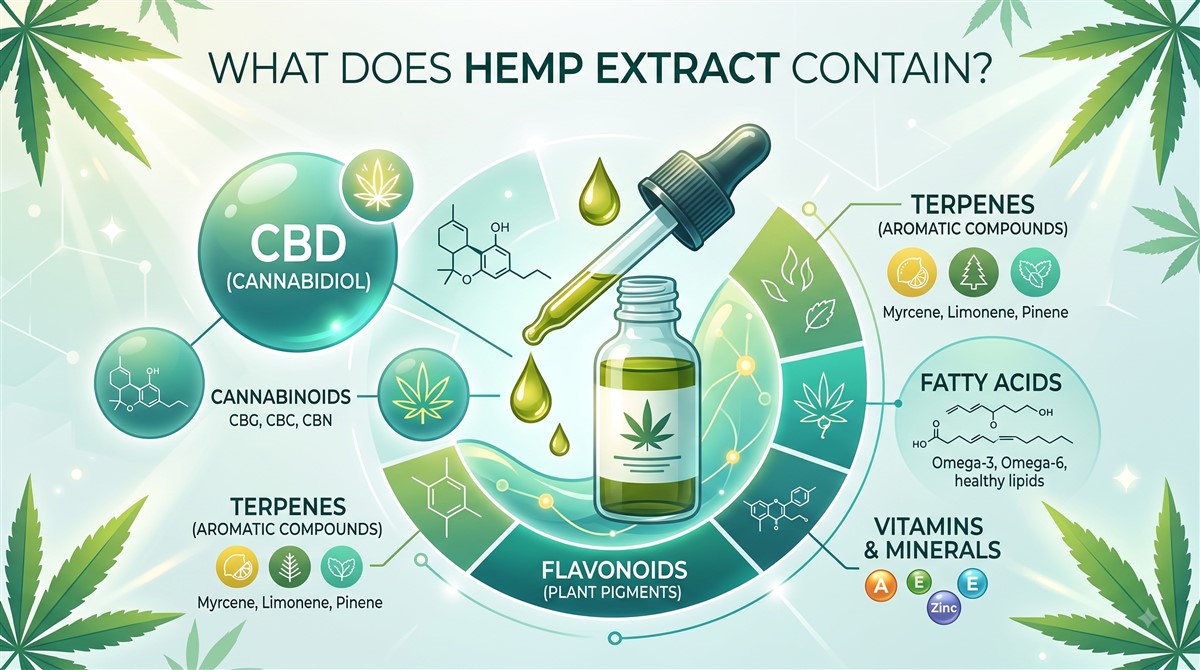
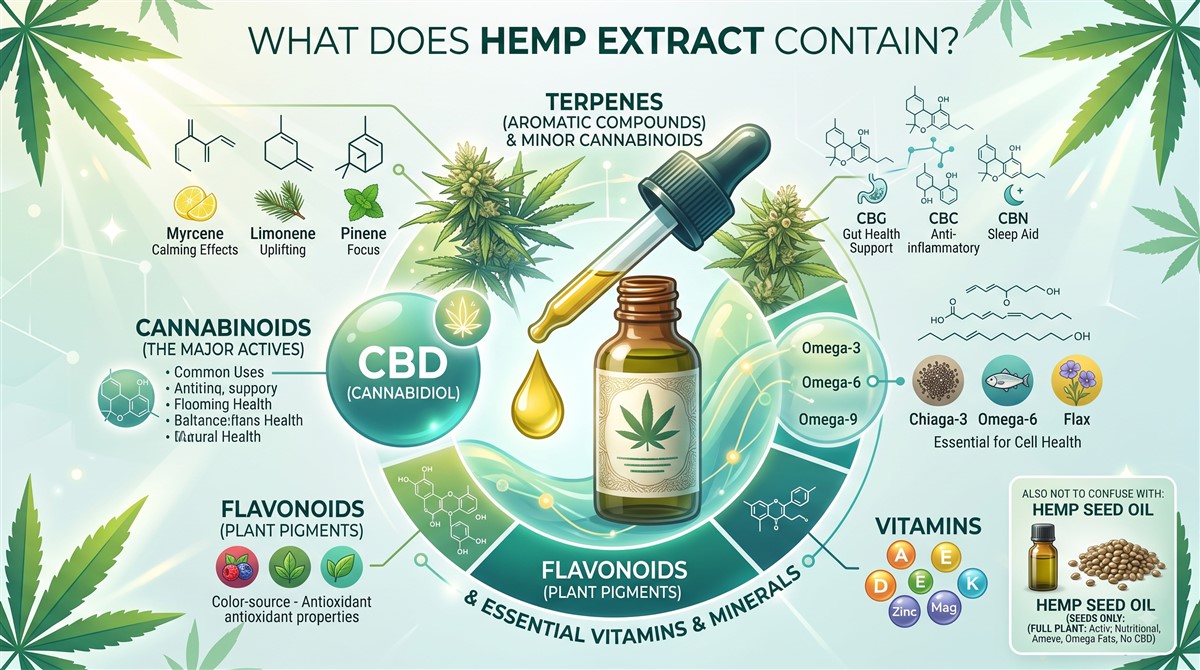
Hemp extract is not a single substance. It is a complex mixture of compounds that occur naturally in the hemp plant. Depending on the extraction method and the plant material used, hemp extract can include:
- Cannabinoids – These are the active compounds found in cannabis plants. CBD is the most well-known, but hemp extract may also contain minor cannabinoids such as CBG (cannabigerol), CBN (cannabinol), CBC (cannabichromene), and others.
- Terpenes – These are aromatic compounds that give hemp its distinctive scent and flavor. Common terpenes found in hemp include myrcene, limonene, and pinene.
- Flavonoids – These are plant compounds that contribute to color and taste, and they are also found in many fruits and vegetables.
- Essential fatty acids – Hemp extract may contain beneficial fats such as omega-3 and omega-6 fatty acids.
- Vitamins and minerals – Trace amounts of various nutrients may be present depending on the extraction process.
In short, hemp extract is the full profile of compounds pulled from the hemp plant. It is the raw material from which many finished CBD products are made.
How Is Hemp Extract Made?
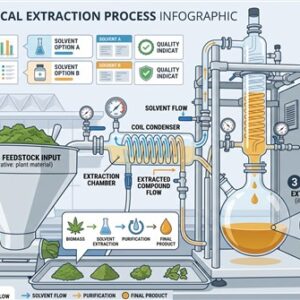
Hemp extract is produced through an extraction process that separates the desirable compounds from the plant material. Common extraction methods include:
- CO₂ extraction – This method uses pressurized carbon dioxide to pull compounds from the plant. It is widely considered one of the cleanest and most efficient methods.
- Ethanol extraction – This method uses food-grade alcohol to dissolve the plant’s compounds. It is effective and commonly used for large-scale production.
- Oil extraction – This method uses carrier oils, such as olive oil or MCT oil, to extract compounds. It is simpler but less common in commercial production.
The choice of extraction method affects the final composition of the hemp extract. Some methods preserve a broader range of compounds, while others may be more selective.
Hemp Extract vs. CBD: What Is the Difference?
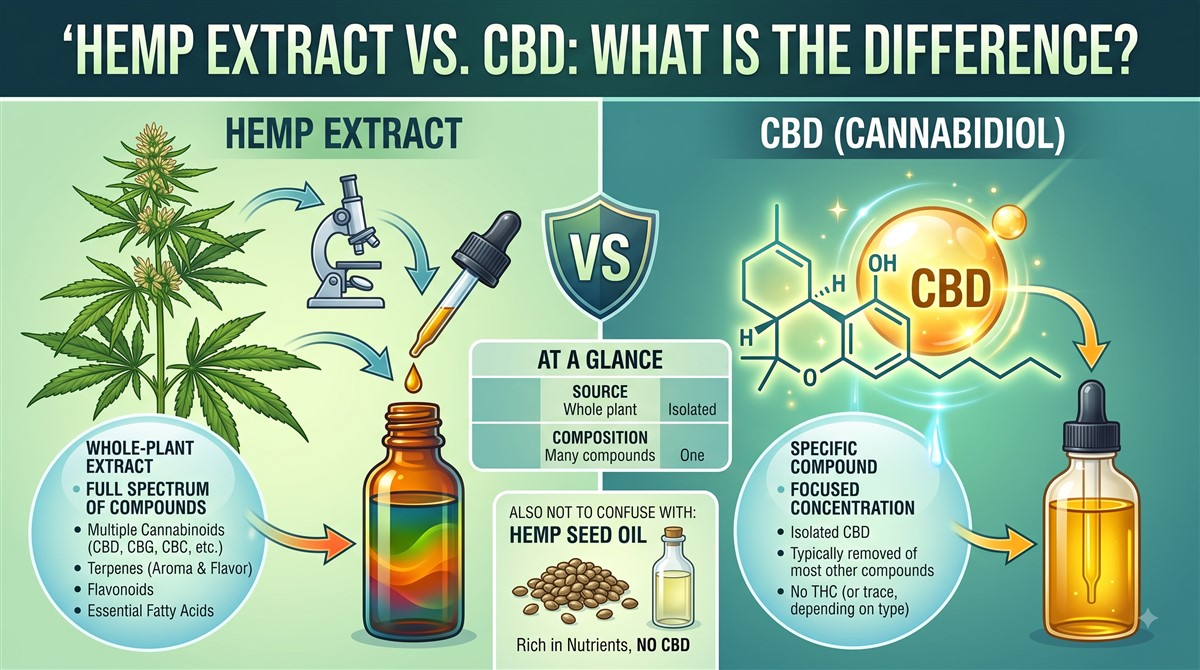
This is where confusion often arises. Many people use the terms “hemp extract” and “CBD” interchangeably, but they are not the same thing.
CBD Is a Single Compound
CBD, short for cannabidiol, is a specific cannabinoid found in cannabis plants, including hemp. It is one of over 100 cannabinoids that occur naturally in the plant.
When you see a product labeled as “CBD oil,” it typically means the product contains CBD as a primary ingredient. However, that product may also contain other compounds from the hemp plant, depending on how it was processed.
Hemp Extract Is the Whole Picture
Hemp extract is the broader category. It encompasses all the compounds extracted from the hemp plant, including CBD, other cannabinoids, terpenes, flavonoids, and more.
Think of it this way: CBD is an ingredient; hemp extract is the source material. Every CBD product starts with hemp extract, but not every hemp extract product is purely CBD.
A Simple Analogy
Imagine you are making orange juice. The whole orange, including the flesh, juice, and zest, represents the hemp extract. The pure, squeezed juice without any pulp represents CBD. Both come from the same source, but one is the full profile, and the other is a single component.
Types of Hemp Extract
Not all hemp extracts are created equal. The way the extract is processed after extraction determines the final composition of the product. Here are the most common types you will encounter:
Full-Spectrum Hemp Extract
Full-spectrum hemp extract contains all the naturally occurring compounds found in the hemp plant, including cannabinoids, terpenes, and flavonoids. Importantly, full-spectrum products contain trace amounts of THC, typically no more than 0.3 percent on a dry weight basis, as defined by federal law.
The presence of multiple compounds working together is sometimes referred to as the “entourage effect,” a term used to describe the combined presence of various plant compounds. Because full-spectrum extract retains the plant’s natural chemical profile, it is often considered the most “complete” form of hemp extract.
Broad-Spectrum Hemp Extract
Broad-spectrum hemp extract is similar to full-spectrum in that it contains a range of cannabinoids and terpenes. The key difference is that broad-spectrum products undergo additional processing to remove THC entirely, while retaining other compounds.
Broad-spectrum extracts offer a middle ground for those who want the range of plant compounds without any THC.
CBD Isolate
CBD isolate is the purest form of CBD. It contains only CBD and no other cannabinoids, terpenes, or flavonoids. The extraction process removes all other plant compounds, leaving behind a crystalline powder that is typically over 99 percent pure CBD.
Isolate is a good choice if you want to focus exclusively on CBD without any other compounds from the hemp plant.
Hemp Seed Oil vs. Hemp Extract: A Critical Distinction
One of the most common points of confusion is the difference between hemp extract and hemp seed oil. They are not the same thing, and understanding the distinction is essential when reading product labels.
Hemp Seed Oil Comes from Seeds
Hemp seed oil is produced by pressing the seeds of the hemp plant. The seeds do not contain significant amounts of cannabinoids like CBD or THC. Instead, hemp seed oil is valued for its nutritional profile. It is rich in essential fatty acids, proteins, and vitamins.
Hemp seed oil is commonly used in cooking, skincare products, and as a dietary supplement. However, it does not provide the same range of cannabinoids as hemp extract.
Hemp Extract Comes from Flowers, Leaves, and Stalks
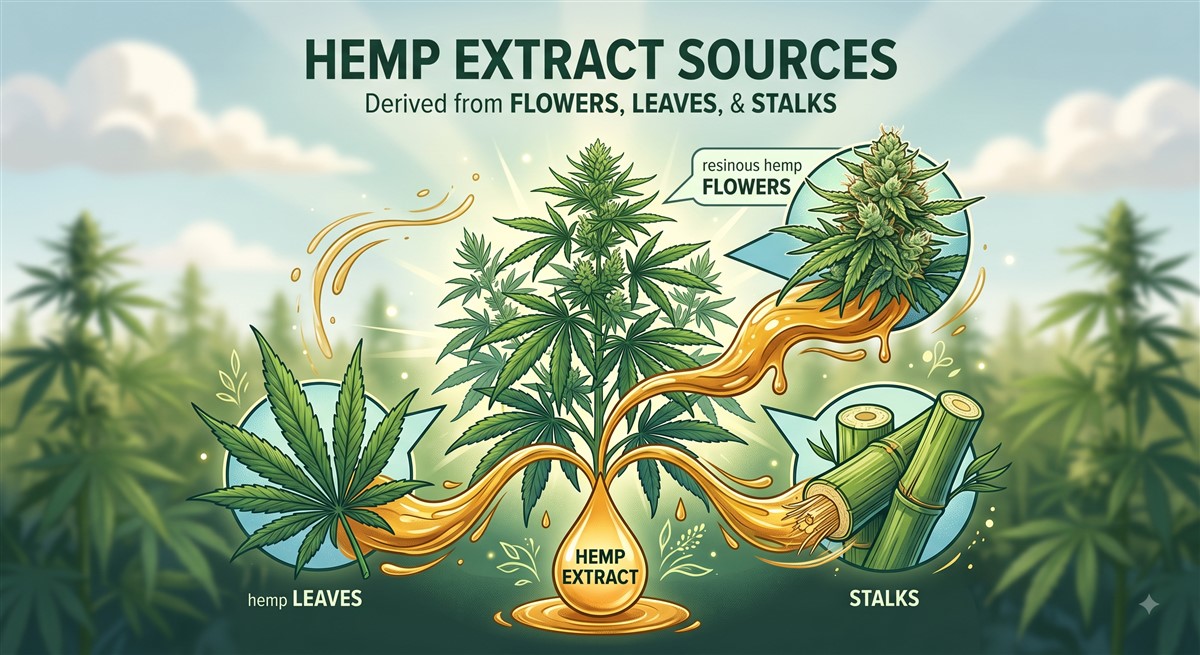
Hemp extract, by contrast, is derived from the flowers, leaves, and stalks of the hemp plant. These are the parts that contain the highest concentrations of cannabinoids and terpenes. This is the source material for CBD oils, tinctures, capsules, and other cannabinoid products.
Why the Difference Matters
Some products labeled simply as “hemp oil” may actually contain hemp seed oil with little to no CBD. If you are looking for a product that contains cannabinoids, check the label for terms like “hemp extract,” “full-spectrum hemp extract,” or “CBD” to confirm what you are getting.
Hemp Extract and the Law: Federal and New York State Regulations
Hemp extract is subject to regulation at both the federal and state levels. Understanding the legal framework can help you identify products that meet quality and safety standards.
Federal Definition of Hemp
Under the 2018 Farm Bill, hemp is defined as “the plant Cannabis sativa L. and any part of that plant, including the seeds thereof and all derivatives, extracts, cannabinoids, isomers, acids, salts, and salts of isomers, whether growing or not, with a delta-9 tetrahydrocannabinol concentration of not more than 0.3 percent on a dry weight basis”. This definition includes hemp extract.
The 2018 Farm Bill removed hemp from the Controlled Substances Act, meaning hemp and hemp-derived products are no longer controlled substances under federal law, provided they meet the THC threshold. However, the FDA retains authority to regulate products containing cannabis or cannabis-derived compounds under the Federal Food, Drug, and Cosmetic Act. You can learn more about the FDA’s approach on their official FDA Cannabis Products page.
New York State Regulations
In New York State, the Office of Cannabis Management (OCM) regulates hemp used or marketed for its cannabinoid content, such as CBD. The Cannabinoid Hemp Program requires anyone processing, manufacturing, or selling cannabinoid hemp products to obtain a license.
Key regulations include:
- Hemp extract must be manufactured into a finished cannabinoid hemp product before it can be offered for retail sale.
- Hemp extract transported into New York State must be accompanied by a certificate of analysis showing a total delta-9 THC concentration of no more than 0.3 percent.
- Products must comply with processing, packaging, labeling, and testing requirements.
These regulations are designed to provide clarity for the industry and protect consumers. When choosing a product, look for brands that demonstrate compliance with these standards. Hemp Therapies, for example, ensures all products meet New York State requirements and are backed by third-party laboratory testing. For more information on New York’s requirements, visit the OCM Cannabinoid Hemp page.
What to Look for on Product Labels
Reading product labels can be confusing, especially with the range of terms used. Here are a few things to look for when choosing a hemp extract product:
Check the Ingredient List
Look for “hemp extract,” “full-spectrum hemp extract,” or “broad-spectrum hemp extract” in the ingredient list. If the label says “hemp seed oil” only, the product may not contain significant cannabinoids.
Look for CBD Content
The label should state the amount of CBD in the product, usually in milligrams (mg) per serving or per bottle. This tells you how much CBD you are getting.
Review the Certificate of Analysis
Reputable brands provide third-party lab test results, often called a Certificate of Analysis (COA). This document confirms the product’s cannabinoid content and verifies that it meets safety standards for contaminants like pesticides, heavy metals, and microbes.
Check for Compliance
In New York State, products must comply with the Cannabinoid Hemp Program regulations. Look for brands that clearly state their commitment to compliance and transparency.
Frequently Asked Questions
Is hemp extract the same as CBD?
No. Hemp extract is a broad term that refers to the full range of compounds extracted from the hemp plant. CBD is one specific compound found within hemp extract.
Does hemp extract contain THC?
It depends on the type of extract. Full-spectrum hemp extract contains trace amounts of THC, typically no more than 0.3 percent. Broad-spectrum extract has had THC removed, and CBD isolate contains no THC at all.
What is the difference between hemp extract and hemp seed oil?
Hemp extract comes from the flowers, leaves, and stalks of the hemp plant and contains cannabinoids. Hemp seed oil comes from the seeds and contains little to no cannabinoids.
Is hemp extract legal?
Yes, hemp extract is legal at the federal level under the 2018 Farm Bill, provided it contains no more than 0.3 percent delta-9 THC on a dry weight basis. In New York State, hemp extract and cannabinoid hemp products are regulated by the Office of Cannabis Management.
Conclusion
Hemp extract is the substance obtained from the flowers, leaves, and stalks of the hemp plant. It contains a complex mixture of compounds, including cannabinoids like CBD, terpenes, flavonoids, and more. CBD, by contrast, is a single compound found within that extract.
Understanding the difference between hemp extract and CBD can help you navigate product labels with greater confidence. Whether you choose a full-spectrum, broad-spectrum, or isolate product depends on your personal preferences and what you are looking for in a hemp-derived product.
When selecting a product, look for clear labeling, third-party lab testing, and compliance with state regulations. Brands like Hemp Therapies prioritize transparency and quality, ensuring that every product meets rigorous standards.
Hemp extract is a versatile ingredient that serves as the foundation for many of the CBD products available today. Knowing what it is and what it is not is the first step toward making informed choices.
Related Hemp Therapies Formulations
The following pages show how Hemp Therapies formulates products for wellness support. They are commercial products or collection pages, not evidence of combined effects between different products.
Readers who want to see how Hemp Therapies approaches cannabinoid products can review the ingredients, strength, directions, and available testing for 9000mg CBN Oil.
For a cannabinoid formulation without ND THC, the 9000mg Broad Spectrum CBD Oil product page provides product-specific ingredients, strength, and testing information. This link is included as a related product example, not as evidence of synergistic effects between different products.
To compare the full range of products currently offered by Hemp Therapies, visit the product collection. Each product should be evaluated on its own formulation, testing, and intended use.
Educational and Regulatory Disclaimer
This article is for educational and informational purposes only and is not medical advice. It does not recommend a dose or claim that a dietary supplement or CBD product diagnoses, treats, cures, mitigates, or prevents any disease. Dietary-supplement structure/function and general-well-being claims must be truthful, non-misleading, and substantiated; a disclaimer does not replace adequate evidence.3 Consult a qualified healthcare professional before using a dietary supplement, especially if you are pregnant or nursing, take medication, have a medical condition, or are considering a high dose.
These statements have not been evaluated by the Food and Drug Administration. This product is not intended to diagnose, treat, cure, or prevent any disease.