


Vitamin C is an essential nutrient. Your body uses it to make collagen, support normal immune function, and protect cells from oxidative damage. Liposomal vitamin C supplies the same nutrient in a different delivery format. It places vitamin C in or around tiny structures made from phospholipids, the same broad type of material found in cell membranes.
This format is designed to protect the ingredient during digestion and change how it is presented to the intestinal tract. Some studies have found higher vitamin C levels in the blood after people took certain liposomal products. That finding is promising, but it does not prove that every liposomal product works the same way or produces better health outcomes.2
This guide explains what vitamin C does, why absorption falls as oral doses rise, and how to interpret the evidence without getting lost in marketing claims.
What Does Vitamin C Do in the Body?
Vitamin C, also called L-ascorbic acid, is water-soluble. Humans cannot make it, so it must come from food or supplements. The vitamin acts as an antioxidant and helps several enzymes perform their normal work.1
These are established functions of the nutrient itself. They do not mean that every vitamin C supplement will produce a specific result for every person.
Fruits and vegetables are the best dietary sources, according to the National Institutes of Health (NIH). The recommended dietary allowance for most adults is 75 mg a day for women and 90 mg a day for men. Needs change during pregnancy and lactation. People who smoke are advised to get an additional 35 mg a day.1
These figures are population-level reference values, not personal treatment recommendations. A product serving can contain far more vitamin C than the daily reference amount, but a larger number on the label is not automatically better. Some studies have found higher vitamin C levels in the blood after people took many liposomal formulations.
Why Does Vitamin C Absorption Fall at Higher Doses?
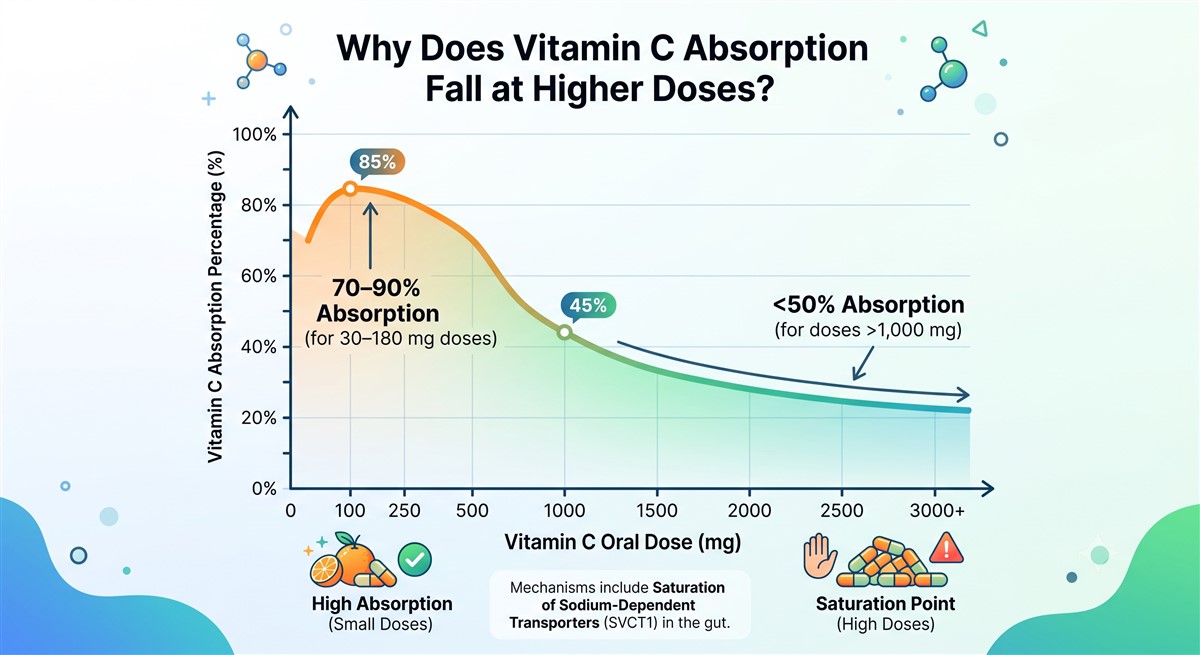
Your digestive system absorbs vitamin C through regulated transport pathways. These pathways become less efficient, in percentage terms, as a single oral dose rises.
The NIH reports that about 70% to 90% of vitamin C is absorbed at moderate intakes of 30–180 mg a day. At oral doses above 1 gram, absorption falls below 50%.1 Vitamin C that is not absorbed passes through the gastrointestinal tract. Absorbed vitamin C that exceeds the body’s needs is excreted in urine.
This does not mean that a conventional tablet or powder is ineffective. It means that doubling a large dose does not necessarily double the amount that reaches the bloodstream. Food intake, dose, current vitamin C status, product formulation, study design, and the timing of blood tests can all affect the result.
What Does “Liposomal” Mean?
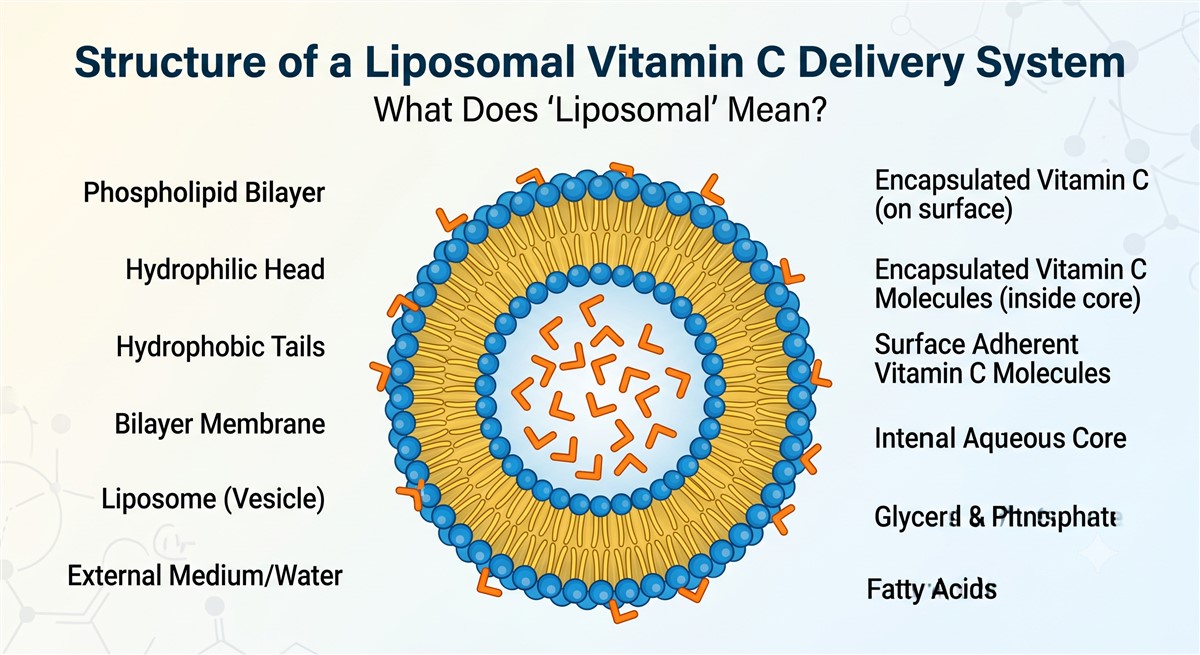
A liposome is a microscopic sphere made from one or more phospholipid layers around a water-based center. In a vitamin C product, some of the vitamin may sit inside these structures or associate with their outer layers.
A simple analogy is a tiny protective bubble carrying an ingredient through part of the digestive process. The goal is to limit the vitamin’s exposure to the digestive environment and influence how it is released and absorbed.
The analogy has limits. A liposomal product does not completely bypass digestion. Nor does the label word “liposomal” prove that intact liposomes enter the bloodstream or deliver vitamin C directly into cells. The behavior of the finished product depends on its ingredients, manufacturing process, stability, and storage.2
How Do Researchers Measure Absorption?
Human studies usually track blood levels of vitamin C for several hours after a person takes a product. Researchers may calculate the “area under the concentration–time curve,” often shortened to AUC. In plain language, AUC estimates the total amount measured in the blood during the test period.
A higher AUC can show greater blood exposure under those study conditions. It does not, by itself, prove better uptake into cells, symptom improvement, disease prevention, or another clinical benefit.2
This distinction matters because nutrient function and product effect are not the same thing. Nutrient function describes vitamin C’s known jobs in the body. A product effect requires evidence that a specific formulation, dose, population, and period of use produced a measured outcome.
What Does the Research Say About Liposomal Vitamin C?
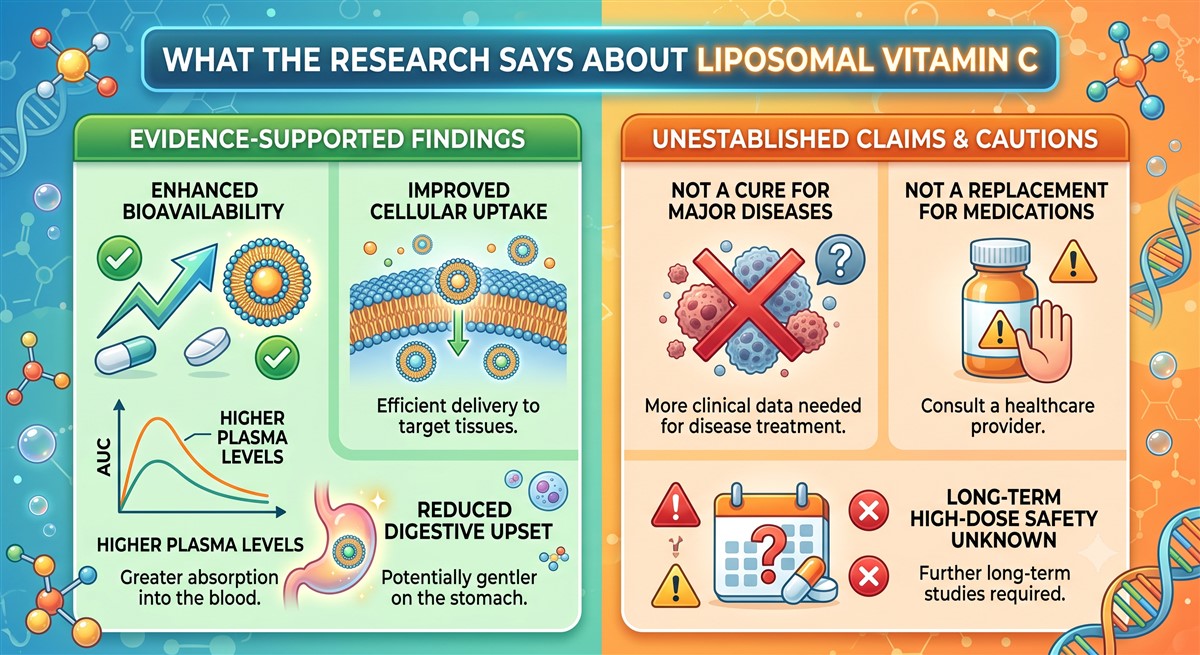
A 2025 scoping review identified 10 studies that compared liposomal and non-liposomal vitamin C. Nine reported higher bioavailability for the liposomal formulation tested. However, the products, doses, participants, blood-collection periods, and reported differences varied widely.2
The review also identified important gaps. Studies did not always account for urinary loss, vitamin C levels before supplementation, uptake into cells, or health outcomes beyond blood concentration.
| What the evidence supports | What the evidence does not establish |
| Several studies reported higher blood exposure for the specific liposomal product tested. | Every liposomal vitamin C product is equivalent or superior. |
| Formulation can affect measured absorption. | Intact liposomes routinely enter the bloodstream or deliver vitamin C directly into cells. |
| More well-controlled comparisons are warranted. | Higher blood levels automatically lead to better health outcomes. |
The most accurate conclusion is modest: some tested liposomal formulations produced higher measured blood exposure than their non-liposomal comparators. More independent research is needed to connect product characteristics with cellular uptake and meaningful health outcomes.2
Future studies would be stronger if they clearly described the formulation, measured participants’ starting vitamin C status, tracked urinary loss and cellular uptake, used appropriate comparison products, and assessed outcomes beyond blood concentration.
How Much Vitamin C Should You Take?
A label may list 500 mg, 1,000 mg, or another amount per serving. That number describes the product. It does not tell you what your personal intake should be.
Your needs can depend on your diet, age, life stage, smoking status, medical history, medications, and reason for considering a supplement. Follow the product label and seek qualified medical advice before using high doses. Extra caution is appropriate for people with kidney disease, a history of kidney stones, or iron-overload conditions, and for anyone who is pregnant, nursing, or taking medication.1
When comparing products, check the amount per serving as well as the serving size. Also review the complete ingredient list, storage instructions, batch information, expiration date, and available quality-testing documents. A large dose on the front label is not proof of superior absorption or benefit. Vitamin C and cannabinoids are different compounds with different biological roles — our high strength CBN Oil is one example of a cannabinoid product that works in a completely different way.
Collagen, Antioxidant Activity, and Immune Function
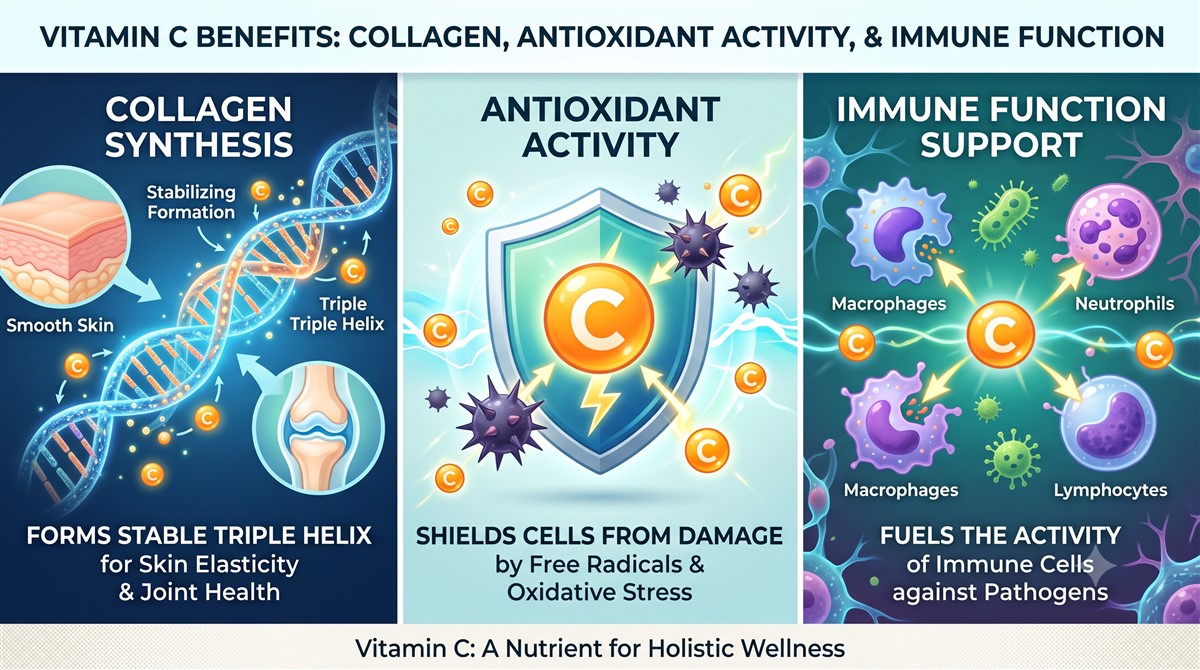
Vitamin C is required for collagen production. It helps enzymes stabilize collagen molecules, which is why adequate intake is necessary for normal connective-tissue function.1
That biological role does not prove that a liposomal product improves skin elasticity, blood-vessel integrity, or wound healing in someone whose vitamin C status is already adequate. Those claims would require studies that tested the specific product and measured those outcomes.
Vitamin C also contributes to normal immune function and is present in immune cells. As an antioxidant, it helps protect cellular components from oxidative damage.1 These facts do not support a promise that a supplement will “boost” immunity or prevent illness.
Oxidative stress is involved in many biological and environmental processes. Even so, vitamin C’s antioxidant role does not show that a liposomal supplement protects respiratory tissue from pollution, seasonal exposure, or other environmental challenges. Environmental exposure also does not automatically mean that every person needs a supplement.
Anyone with a respiratory condition or persistent symptoms should seek appropriate medical evaluation. A supplement should not replace diagnosis or treatment.
How Does Liposomal Vitamin C Compare With Standard Forms?
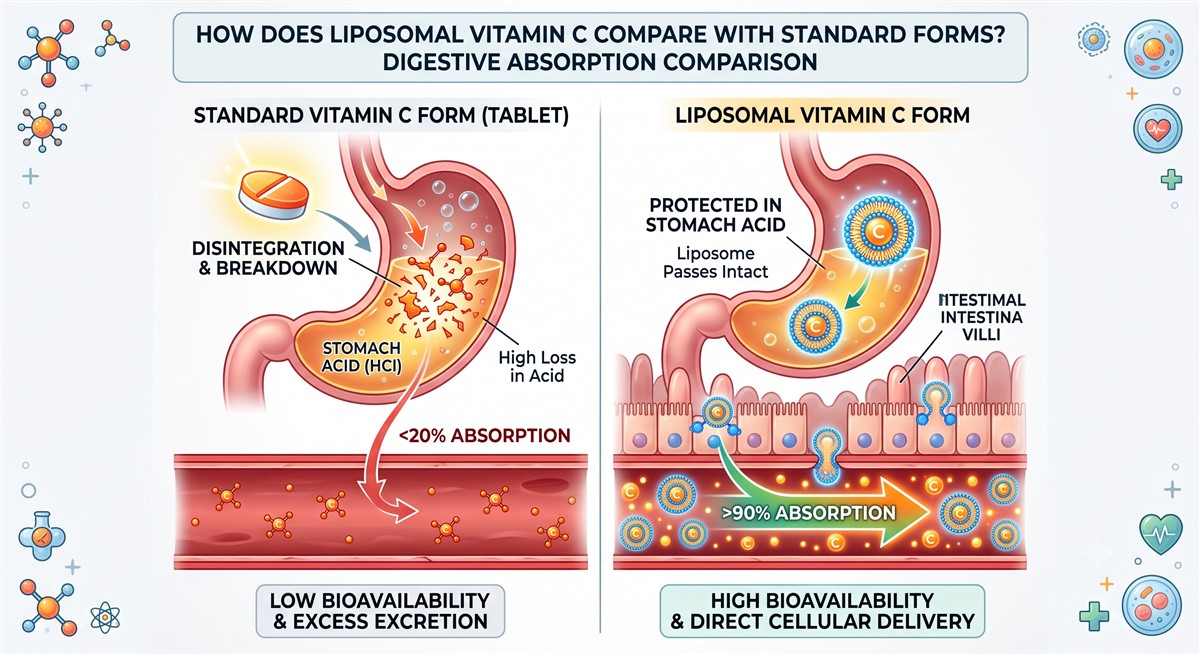
Conventional vitamin C remains an established way to supply the nutrient. Many people can meet their needs through food. Liposomal vitamin C offers another delivery approach, not a guaranteed health advantage.1
Liquid and solid products also differ in practical ways. They may contain different ingredients and have different tastes, serving measurements, storage needs, and shelf lives. A liquid is not automatically more bioavailable simply because it is already dissolved. The complete formulation—and the evidence for that formulation—matters.
Cost is also relevant. A more expensive delivery format may be worth considering when supported by credible product-specific evidence, but price and packaging do not prove performance.
What Should You Look for in a Liposomal Product?
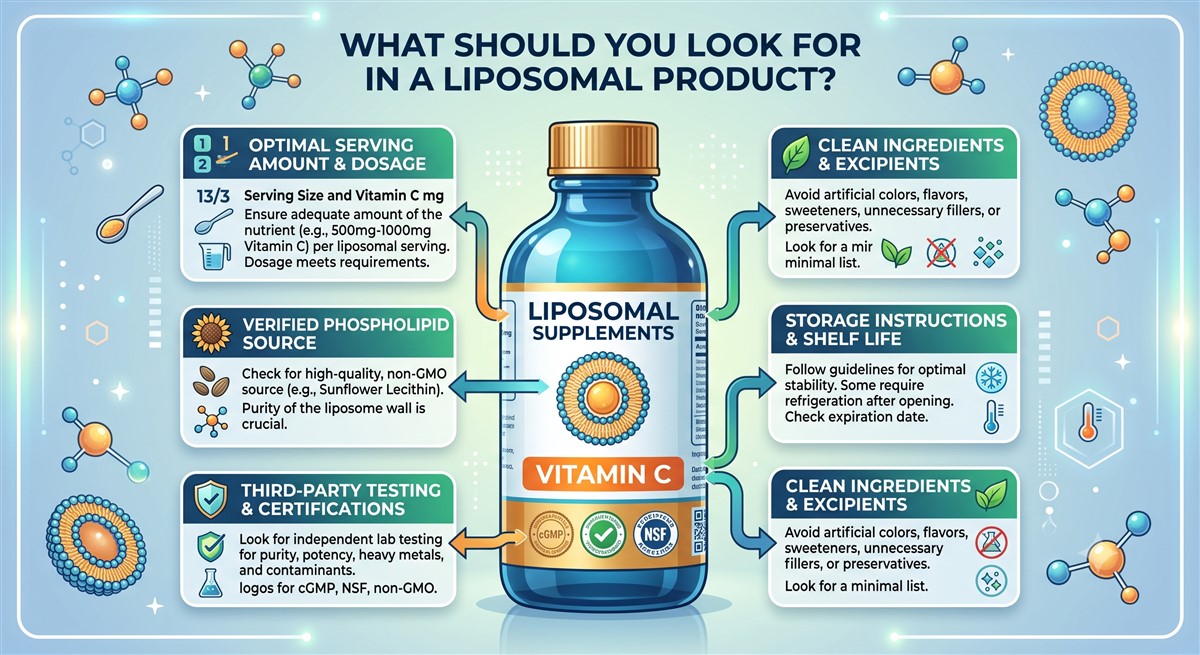
The word “liposomal” does not confirm particle size, encapsulation efficiency, purity, stability, or absorption. Those features depend on the ingredients, manufacturing process, analytical methods, packaging, and storage.
Look for a clear vitamin C amount per serving, a complete ingredient list, batch identification, an expiration or best-before date, and specific storage directions. The manufacturer should also make relevant quality-testing information accessible.
If a company makes a numerical claim about liposome size, encapsulation, purity, or absorption, look for the test method and evidence behind that figure. Terms such as “pharmaceutical grade,” “advanced,” and “maximum absorption” should not take the place of verifiable specifications.
Third-party testing can provide useful information about identity, content, contaminants, or stability. Its value depends on what was tested. It should not be treated as proof that a product will produce a clinical result.
Practical Points for Daily Use
Follow the label for timing and serving instructions. Research does not show that every liposomal vitamin C product is equally well tolerated with or without food, or that timing never matters. High oral intakes can cause gastrointestinal discomfort, and tolerance differs from person to person.1
Liquid products may need different storage than tablets or capsules. Heat, light, air exposure, preservatives, the source of the phospholipids, and the packaging can affect stability. Follow the manufacturer’s verified storage instructions and do not use a product beyond its stated shelf life.
Do not assume that a suggested starting amount is medically appropriate for you. Follow the label, avoid exceeding its directions without professional advice, and stop use and seek advice if an unexpected reaction occurs.
Are There Special Considerations for Some People?
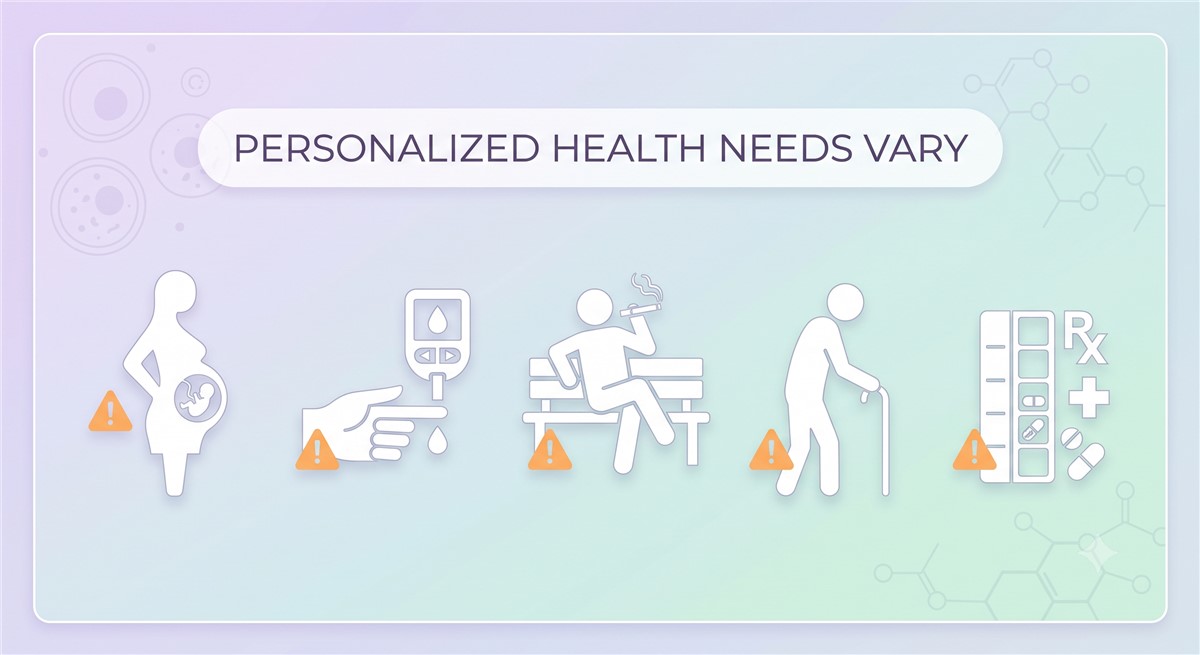
Vitamin C requirements vary by age, sex, pregnancy, lactation, smoking status, and medical context. NIH reference values are useful general guidance, but they are not individualized treatment plans.1
Physically active people still need enough vitamin C. Exercise alone, however, does not show that every athlete needs a high-dose or liposomal product. Diet, training load, starting vitamin C status, and professional guidance should shape that decision. Claims that all athletes need more vitamin C or recover better with a liposomal product require direct evidence.
People with medical conditions, those taking prescription drugs, and anyone who is pregnant or nursing should discuss supplementation with a qualified healthcare professional. A different delivery format does not remove possible contraindications or interaction concerns.
What About Cannabinoid Products?
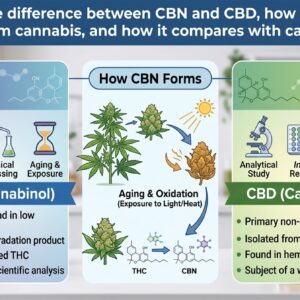
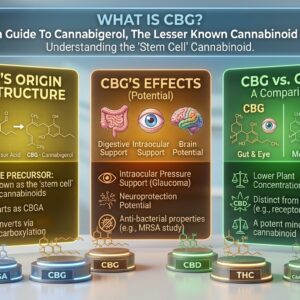
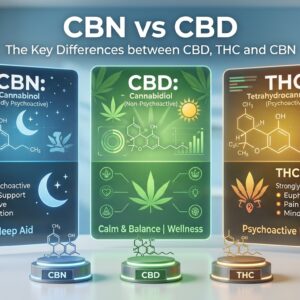
Vitamin C and cannabinoids such as CBD, CBG, and CBN are different compounds. They have different biological roles and different evidence bases. Research on vitamin C absorption cannot be applied to cannabinoids, and using liposomal methods in both categories does not show that taking them together creates a combined benefit.
The connection is technological. A manufacturer can apply phospholipid-based formulation principles to several ingredients, but each finished product must be judged by its own composition, testing, intended use, and supporting evidence.
The cannabinoid links below are related product examples. They are not scientific references for vitamin C and do not support a claim of combined effects.
Sustainability and the Future of Liposomal Technology

A product is not automatically more sustainable because it is liposomal. Environmental performance depends on the source of its phospholipids, agricultural practices, manufacturing energy, transport, packaging, refrigeration needs, shelf life, and waste.
There is not enough evidence to say that higher absorption always reduces raw-material use or gives a liposomal product a smaller environmental footprint. A fair comparison would require a life-cycle assessment of the finished products.
Consumers who care about sustainability can look for specific, verifiable information on ingredient sourcing, recyclable packaging, manufacturing standards, and waste reduction.
Researchers continue to study how lipid composition, particle features, manufacturing methods, and storage affect liposomal delivery.2 Future possibilities include targeted delivery, extended release, and multi-ingredient encapsulation. These are research directions, not established features of every retail supplement. Combining several ingredients in one liposomal system also does not prove synergy or establish the right dose for every person.
Making an Informed Choice
When comparing conventional and liposomal vitamin C, consider your diet, intended use, dose per serving, additional ingredients, cost, storage needs, product testing, and the quality of any formulation-specific evidence.
Higher blood exposure may be relevant, but it is not the same as feeling better or achieving a clinical benefit. Be cautious with testimonials and vague phrases such as “maximum absorption,” “direct cellular delivery,” and “optimal support.” Good evidence should state what was tested, who participated, the dose and duration, and what researchers measured.
The practical takeaway is simple. Vitamin C has established roles in collagen production, antioxidant protection, and normal immune function. Absorption becomes proportionally less efficient at large oral doses. Some liposomal formulations have produced higher blood exposure than standard forms in comparative studies, but products and study methods vary.1 2
Liposomal vitamin C can be considered an alternative delivery format. It is not a replacement for a balanced diet, medical care, or evidence-based treatment. Evaluate the specific product, follow its label, and seek professional guidance when your health, medications, or intended dose make that appropriate.
Related Hemp Therapies Formulations
The following pages show how Hemp Therapies uses phospholipid-based formulation methods with other compounds. They are commercial product or collection pages, not evidence of combined effects with vitamin C.
Readers who want to see how this formulation approach is used with a cannabinoid can review the ingredients, strength, directions, and available testing for 9000mg Liposomal CBN Oil.
For a cannabinoid formulation with ND THC, the 9000mg Liposomal Broad Spectrum CBD Oil product page provides product-specific ingredients, strength, and testing information. This link is included as a related formulation example, not as evidence that CBD and vitamin C have a combined effect.
To compare the liposomal formats currently offered by Hemp Therapies, visit the liposomal products collection. Each product should be evaluated on its own formulation, testing, and intended use. Evidence about vitamin C should not be assumed to apply to cannabinoids.
References
[1] NIH Office of Dietary Supplements — Vitamin C Fact Sheet for Health Professionals
Educational and Regulatory Disclaimer
This article is for educational and informational purposes only and is not medical advice. It does not recommend a dose or claim that a dietary supplement or CBD product diagnoses, treats, cures, mitigates, or prevents any disease. Dietary-supplement structure/function and general-well-being claims must be truthful, non-misleading, and substantiated; a disclaimer does not replace adequate evidence.3 Consult a qualified healthcare professional before using a dietary supplement, especially if you are pregnant or nursing, take medication, have a medical condition, or are considering a high dose.
These statements have not been evaluated by the Food and Drug Administration. This product is not intended to diagnose, treat, cure, or prevent any disease.