

If you have ever asked yourself “where is CBD legal,” you are not alone. The legal status of CBD varies significantly across the United States and around the world. Understanding these differences can help you make informed decisions about purchasing, possessing, and using CBD products.
The answer to “is CBD legal in all 50 states” is not a simple yes or no. While hemp-derived CBD is federally legal under the 2018 Farm Bill, individual states have their own regulations. Some states have fully embraced CBD, while others have imposed restrictions or limited access to medical programs. Internationally, the landscape is even more diverse.
This guide breaks down the current legal status of CBD in the United States and around the world. Whether you are a consumer, a traveler, or simply curious, this article provides the factual information you need to navigate the complex world of CBD legality.
The Federal Landscape: CBD and U.S. Law
Understanding where CBD is legal begins with federal law. The 2018 Farm Bill legalized hemp and hemp-derived products at the federal level, provided they contain no more than 0.3 percent delta-9 THC on a dry weight basis. This legislation removed hemp from the Controlled Substances Act, effectively legalizing CBD derived from hemp.
However, the federal landscape is not static. Significant changes are on the horizon. Under Section 781 of Public Law 119-37, new THC limits are scheduled to take effect on November 12, 2026. These changes will impose per-container THC thresholds that could reclassify many full-spectrum CBD products as controlled substances under the Controlled Substances Act.
The FDA also retains authority over CBD products. In March 2026, the FDA submitted a document titled “Cannabidiol (CBD) Products Compliance and Enforcement Policy” to the White House for review. This signals ongoing regulatory activity at the federal level. Additionally, legislative proposals like the HEMP Act would require the FDA to establish milligram limits for CBD products, with automatic limits taking effect if the agency fails to act.
For consumers, this means the federal legality of CBD is subject to change. Staying informed about these developments is essential for anyone purchasing or using CBD products.
Is CBD Legal in All 50 States?
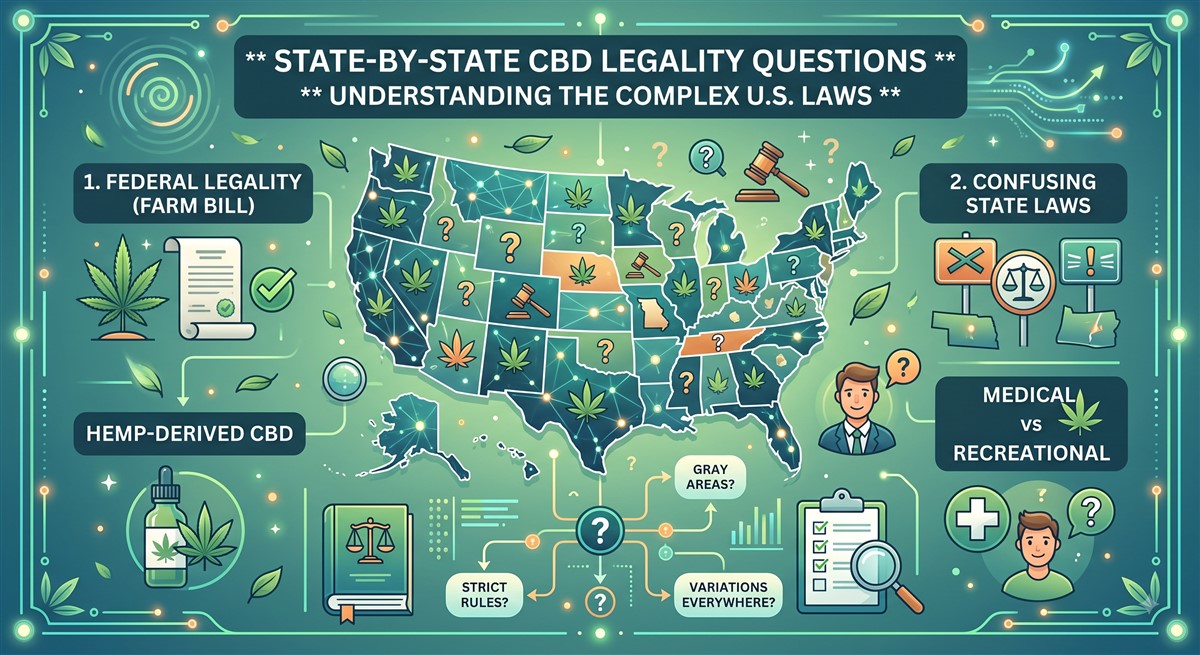
The short answer is no. While hemp-derived CBD is federally legal, states can impose their own restrictions. The result is a patchwork of laws that can be confusing for consumers.
States Where CBD Is Fully Legal
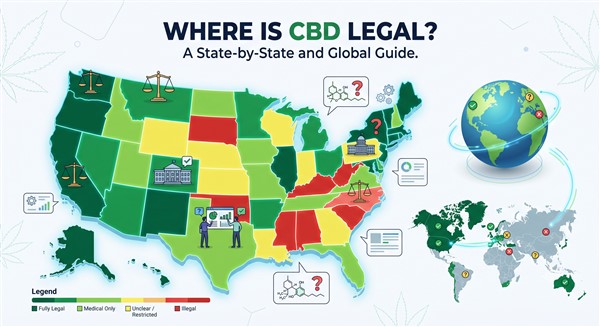
Many states have fully legalized CBD, allowing for the sale and use of hemp-derived products without significant restrictions. According to the World Population Review, states with fully legal CBD include Alaska, Arizona, California, Colorado, Delaware, Illinois, Maine, Maryland, Massachusetts, Michigan, Minnesota, Missouri, Montana, Nevada, New Jersey, New Mexico, New York, Ohio, Oregon, Rhode Island, Vermont, Virginia, and Washington.
These states generally align with federal guidelines, allowing products with less than 0.3 percent THC. Some of these states have also legalized recreational cannabis, further expanding access to cannabinoid products.
States with Conditional or Restricted CBD Access
Other states have more restrictive approaches. States like Alabama, Arkansas, Florida, Hawaii, and Louisiana allow CBD only for medical use. In these states, consumers typically need a medical recommendation to access CBD products.
Some states have “CBD with THC Only” status, meaning they permit CBD products but with restrictions on THC content. These states include Georgia, Indiana, Iowa, Tennessee, Texas, and Wisconsin. In these states, broader recreational use remains prohibited, and access to cannabis products is tightly regulated.
A handful of states have even stricter laws. Idaho, Indiana, Kansas, Nebraska, and Tennessee do not allow medical marijuana programs, though some may permit limited CBD use.
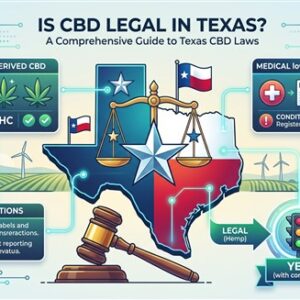
CBD Legality in Texas: A Closer Look
Texas presents a particularly complex case. The state currently has a limited medical CBD program, and the legal landscape is in flux.
Under current Texas law, hemp-derived CBD products are legal as long as they contain no more than 0.3 percent THC. However, the state has taken a strict stance on other cannabinoids. In October 2021, the Texas Department of State Health Services classified delta-8 THC as a Schedule I controlled substance, effectively making it illegal in the state. This decision surprised many retailers and consumers, as delta-8 had been widely available following the 2018 Farm Bill.
The Texas Legislature has also been active on this issue. Senate Bill 5, introduced in 2026, would create a blanket ban on products containing any “detectable amount of any cannabinoid” other than CBD and CBG. This bill would eliminate the majority of hemp products currently available in Texas, including those that are legal under the federal definition. The bill passed the Senate State Affairs Committee unanimously and advanced to the full chamber.
Governor Greg Abbott has asked lawmakers to prioritize hemp regulatory issues. While Abbott has expressed support for banning sales to anyone under 21 and restricting intoxicating products, he has not endorsed a full ban. The outcome of these legislative efforts remains uncertain.
For Texas consumers, this means the legal status of CBD and other hemp-derived products could change significantly in the near future. It is advisable to stay informed about legislative developments and to purchase products from reputable sources that comply with current regulations.
For a closer look at Hemp Laws in Texas see our article Is CBD Legal in Texas? A Comprehensive Guide to Texas CBD Laws
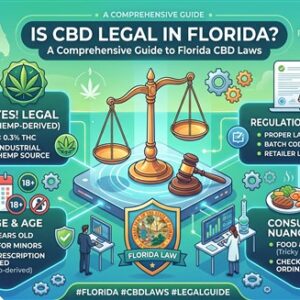
CBD Legality in Florida: A Closer Look
Florida has a more established medical cannabis program, and CBD products are available to qualified patients.
Florida law allows for the use of hemp-derived CBD products, provided they meet the definition of a “hemp derivative” under state law. Consumers do not need a license to buy and use these products, as long as the products comply with state regulations.
However, Florida restricts CBD to medical use only. This means that while hemp-derived CBD products are available, broader access is limited. The state’s medical marijuana program, established through a constitutional amendment, allows qualified patients to access a range of cannabis products.
Enforcement in the cannabis and CBD space has been increasing in Florida, particularly after 2025 updates to controlled substance schedules. This suggests that regulatory oversight is becoming more rigorous.
For consumers in Florida, the key takeaway is that CBD products are available but primarily through the medical program. Hemp-derived CBD products that comply with federal and state standards are generally accessible, but consumers should always verify that products meet legal requirements.
Still unsure about the Law in Florida? Check out our article Is CBD Legal in Florida? Guide to Florida CBD Laws.
International CBD Legality: A Global Perspective
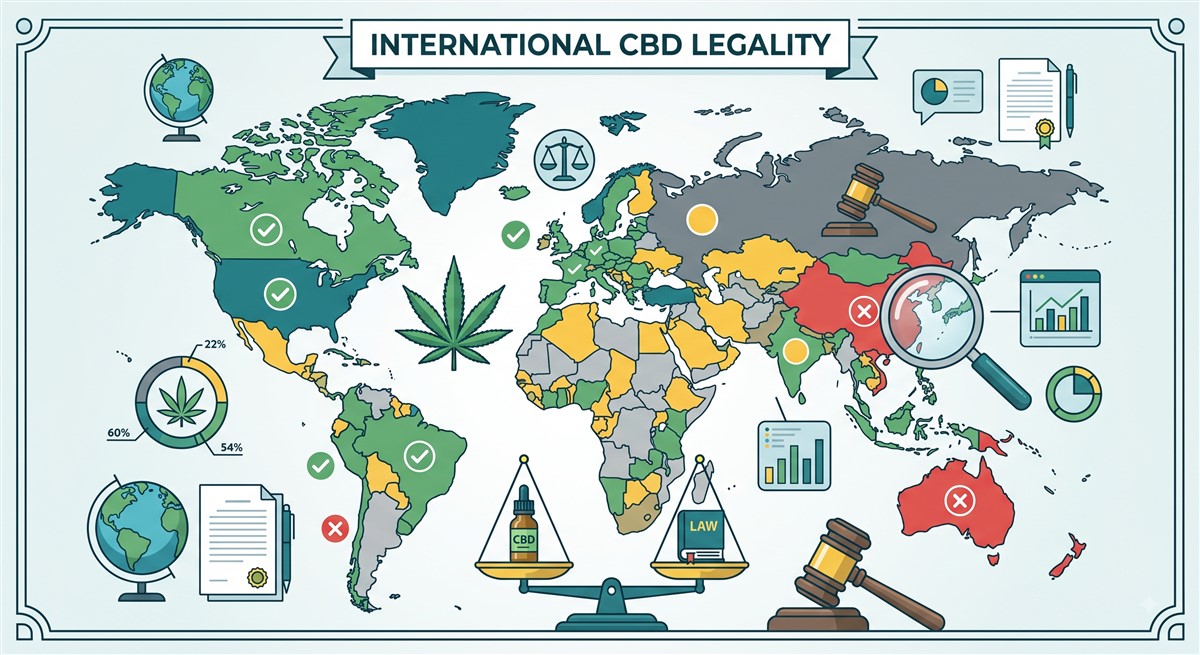
Beyond the United States, the legal status of CBD varies dramatically from country to country. Travelers and international consumers must exercise caution, as laws can differ significantly from U.S. regulations.
Europe
In Europe, the legal status of CBD is generally more permissive than in many other regions. Most European countries allow CBD products with low THC content, typically below 0.2 or 0.3 percent. However, the regulatory framework varies by country. The European Union’s Novel Food regulation has created challenges for CBD food products, as CBD is considered a novel food ingredient that requires authorization before it can be marketed.
Countries like Switzerland, the United Kingdom, and Germany have relatively open markets for CBD. However, travelers should always check specific country regulations before bringing CBD products across borders.
Asia-Pacific
The Asia-Pacific region presents a mixed picture. Japan recently reformed its hemp laws to allow compliant CBD products, provided they contain zero detectable THC. This is a stricter standard than the U.S. federal limit of 0.3 percent. Most U.S. full-spectrum CBD products do not meet Japanese requirements.
Hong Kong has taken the opposite approach, banning all cannabis derivatives, including CBD, in February 2023. There is no THC threshold or hemp exception in Hong Kong.
China produces approximately 50 percent of the world’s legal hemp and is a major supplier of CBD isolate to global markets. However, the Chinese government prohibits domestic consumption of CBD, classifying it under its drug control framework. The one exception is cosmetic products, which have an approval pathway.
South Korea allows CBD only for medical purposes, with very strict restrictions. India has a patchwork of state-dependent regulations.
Other Regions
In Canada, CBD is legal for both medical and recreational use, following the country’s legalization of cannabis in 2018. Australia allows CBD for medical purposes, with the Therapeutic Goods Administration establishing a framework for access.
Many other countries have restrictive policies. Travelers should never assume that CBD is legal in a foreign country. Bringing CBD products into a country where they are prohibited can result in serious legal consequences.
Frequently Asked Questions
Is CBD legal in all 50 states?
No. While hemp-derived CBD is federally legal, individual states have their own regulations. Some states allow CBD without significant restrictions, while others limit access to medical programs or impose strict THC limits.
Is CBD legal in Texas?
Yes, but with restrictions. Hemp-derived CBD products with less than 0.3 percent THC are currently legal. However, the state has banned delta-8 THC and is considering legislation that would further restrict hemp products.
Is CBD legal in Florida?
Yes, but primarily through the medical program. Hemp-derived CBD products that comply with state and federal standards are available, but broader access is limited to medical use.
Can I travel internationally with CBD?
Generally, no. Many countries have strict laws against CBD, and bringing it across borders can lead to serious legal consequences. Always check the specific laws of your destination before traveling with CBD products.
What is changing in U.S. federal law?
New THC limits are scheduled to take effect on November 12, 2026, under Section 781 of Public Law 119-37. These changes could reclassify many full-spectrum CBD products as controlled substances.
Conclusion
The question “where is CBD legal” does not have a simple answer. In the United States, CBD legality depends on both federal and state laws. While hemp-derived CBD is federally legal under the 2018 Farm Bill, individual states have their own regulations. Some states have fully embraced CBD, while others have imposed restrictions or limited access to medical programs. Texas and Florida represent two distinct approaches, with Texas facing ongoing legislative battles and Florida maintaining a medical-focused framework.
Internationally, the legal landscape is even more diverse. Countries like Japan have embraced CBD with strict zero-THC requirements, while others like Hong Kong have banned it entirely. Travelers must exercise extreme caution and research local laws before bringing CBD products across borders.
As the regulatory environment continues to evolve, staying informed is essential. Reputable brands like Hemp Therapies prioritize compliance with state and federal regulations, ensuring that their products meet the highest standards of quality and transparency. Whether you are a consumer in Texas, Florida, or anywhere else, understanding the legal landscape is the first step toward making informed choices.
Educational and Regulatory Disclaimer
This article is for educational and informational purposes only and is not medical advice. It does not recommend a dose or claim that a dietary supplement or CBD product diagnoses, treats, cures, mitigates, or prevents any disease. Dietary-supplement structure/function and general-well-being claims must be truthful, non-misleading, and substantiated; a disclaimer does not replace adequate evidence.3 Consult a qualified healthcare professional before using a dietary supplement, especially if you are pregnant or nursing, take medication, have a medical condition, or are considering a high dose.
These statements have not been evaluated by the Food and Drug Administration. This product is not intended to diagnose, treat, cure, or prevent any disease.