


Glutathione is a small molecule your body makes naturally. It helps cells manage normal oxidative processes, supports the handling of certain compounds, and takes part in immune regulation. Because of these important roles, supplement marketers often make broad promises about “detox,” immunity, liver health, and healthy aging.
The science is more nuanced. Glutathione’s importance inside the body does not automatically mean that taking a supplement will improve health or prevent disease. Human research shows that some oral glutathione products can change measured glutathione levels, but evidence for meaningful clinical benefits remains limited.1
Liposomal glutathione uses phospholipid-based particles designed to protect and deliver the ingredient differently from a conventional capsule or powder. This guide explains what that means, what two important human studies found, and what consumers should look for without overstating the evidence.
What Is Glutathione?
Glutathione is a tripeptide, meaning it contains three amino acids: glutamate, cysteine, and glycine. Your body produces it, and it exists mainly in two forms: reduced glutathione and oxidized glutathione.
These forms work together in what scientists call redox balance. In everyday terms, redox balance describes how cells manage normal chemical reactions involving oxidation and reduction. Glutathione also participates in the processing of certain substances made inside the body and compounds that come from outside it. Scientists sometimes use the term xenobiotic metabolism for this second role.1
People often call glutathione the “master antioxidant.” That phrase is popular, but it is not a formal scientific classification. It can also create the wrong impression. Glutathione has central biological functions, but those functions do not prove that an oral supplement benefits every person.
Glutathione status may vary with age, diet, health, environmental exposure, and other factors. Researchers may find lower glutathione levels in people with a particular condition, but an association alone does not show that a glutathione supplement will prevent, treat, or reverse that condition.1
Why Do Experts Debate Oral Glutathione?
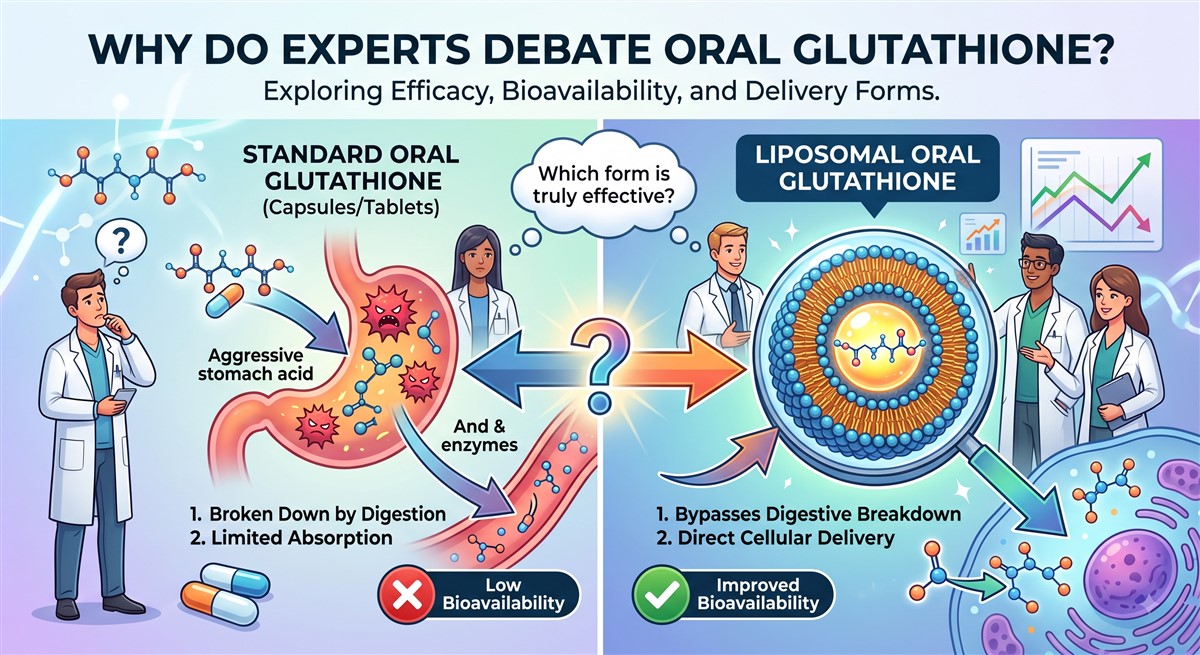
For years, discussions about glutathione supplements often started with a simple claim: digestion breaks down ordinary oral glutathione, so it does not work. Human research shows that the picture is not that simple.
Absorption and the body’s response may depend on the formulation, dose, length of use, a person’s starting glutathione status, and which part of the blood or body researchers measure. A six-month randomized, double-blind, placebo-controlled trial studied 54 healthy, nonsmoking adults who took conventional oral glutathione at 250 mg or 1,000 mg per day. Researchers reported increases in glutathione in several measured body compartments, with results that varied by dose and time.3
That study does not prove that every conventional product is effective or that higher glutathione levels lead to better health. It does, however, challenge the sweeping claim that digestion always destroys ordinary oral glutathione or makes it useless.
Consumers should view liposomal products as another delivery approach, not as a proven solution to the universal failure of conventional glutathione. Sublingual, inhaled, topical, and intravenous products also use different routes. Do not use evidence for one route to prove the effectiveness or safety of another.
What Does “Liposomal” Mean?
One or more layers of phospholipids form a tiny structure called a liposome. Cell membranes contain the same broad type of material. These layers can surround a water-based center. In a glutathione product, these structures may hold some of the ingredient inside or bind it to their phospholipid layers.
The design aims to protect glutathione during part of the digestive process and change how the product releases and presents it for absorption. That is the intended design. It is not proof that every product remains intact through digestion or delivers glutathione directly into cells.
Finished products can differ in important ways, including:
- the source and composition of the phospholipids;
- particle size and stability;
- how much glutathione the particles actually encapsulate;
- manufacturing and storage conditions; and
- the amount of glutathione per serving.
For this reason, the word liposomal does not establish quality or performance on its own. Claims that a supplement “bypasses” biological barriers or acts like a molecular shuttle are stronger than current human evidence supports. A more accurate description is that liposomal technology uses a phospholipid-based delivery design. Researchers have studied how this design affects measured glutathione status.2
Glutathione Biology Is Not the Same as a Supplement Benefit
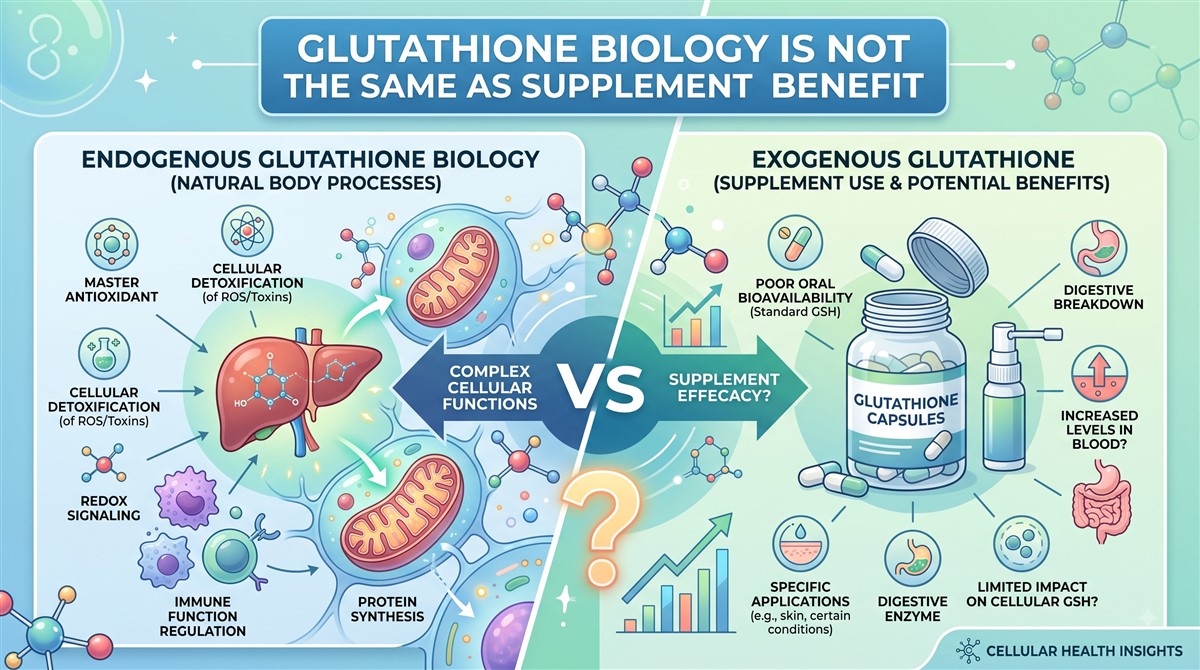
One of the easiest ways to misunderstand supplement research is to blur three different kinds of evidence.
| Evidence level | What it can reasonably tell you |
| Established biology | Glutathione has defined roles in antioxidant defense, redox signaling, metabolism, and immune regulation. |
| Human supplementation study | A particular dose and formulation changed the outcomes researchers measured in the study participants. |
| Finished-product claim | A commercial product needs evidence that supports the specific effect the company claims. |
Glutathione’s normal roles give researchers a good reason to study supplementation. They do not prove that a retail product “detoxes” the body, boosts immunity, protects the liver, reverses aging, or treats disease.1
The same distinction applies to biomarkers. A change in a blood marker can be scientifically interesting, but it does not automatically mean that participants felt better, developed fewer health problems, or lived longer. Claims about symptoms, disease risk, or quality of life require studies that directly measure those outcomes.
What Do Human Studies Actually Show?
Two studies are especially useful when discussing oral glutathione. They tested different products under different conditions, so readers should not treat them as a head-to-head comparison.
| Study | What researchers tested | What they reported | Important limits |
| Conventional oral glutathione trial | 54 healthy, nonsmoking adults; placebo, 250 mg/day, or 1,000 mg/day for six months | Time- and dose-related increases in glutathione across several measured compartments | Did not establish broad clinical benefits or test a liposomal product |
| Liposomal glutathione pilot | 12 healthy adults ages 50–80; 500 mg/day or 1,000 mg/day for one month | Increases in several blood glutathione measures and changes in selected oxidative-stress and immune-function biomarkers | No placebo, no conventional comparator, six people per dose, short duration, manufacturer funding |
The conventional trial supports a limited but useful conclusion: ordinary oral glutathione can influence measured body stores under defined study conditions.3
The liposomal pilot studied one specific formulation in 12 healthy adults between 50 and 80 years old. Six participants received 500 mg per day, and six received 1,000 mg per day. After one month, researchers reported increases in glutathione in several blood compartments and changes in selected biomarkers related to oxidative stress and immune function.2
How Should Consumers Interpret the Liposomal Pilot?
The pilot is promising, but its limitations matter. It had no placebo group and no non-liposomal comparison group. It was short, included only six people at each dose, and had limited statistical power. The manufacturer funded the study and supplied the tested product. These facts do not erase the findings, but they make strong conclusions inappropriate.2
The most accurate takeaway is this: over one month, researchers observed an association between the tested liposomal formulation and changes in measured glutathione levels and selected biomarkers. The study did not prove that liposomal glutathione is superior to conventional oral glutathione, that either dose was optimal, that all liposomal products work the same way, or that the biomarker changes produced a meaningful health benefit.
A reliable comparison would require a larger randomized trial that tests well-characterized liposomal and non-liposomal products under the same conditions.
How Much Liposomal Glutathione Should You Take?
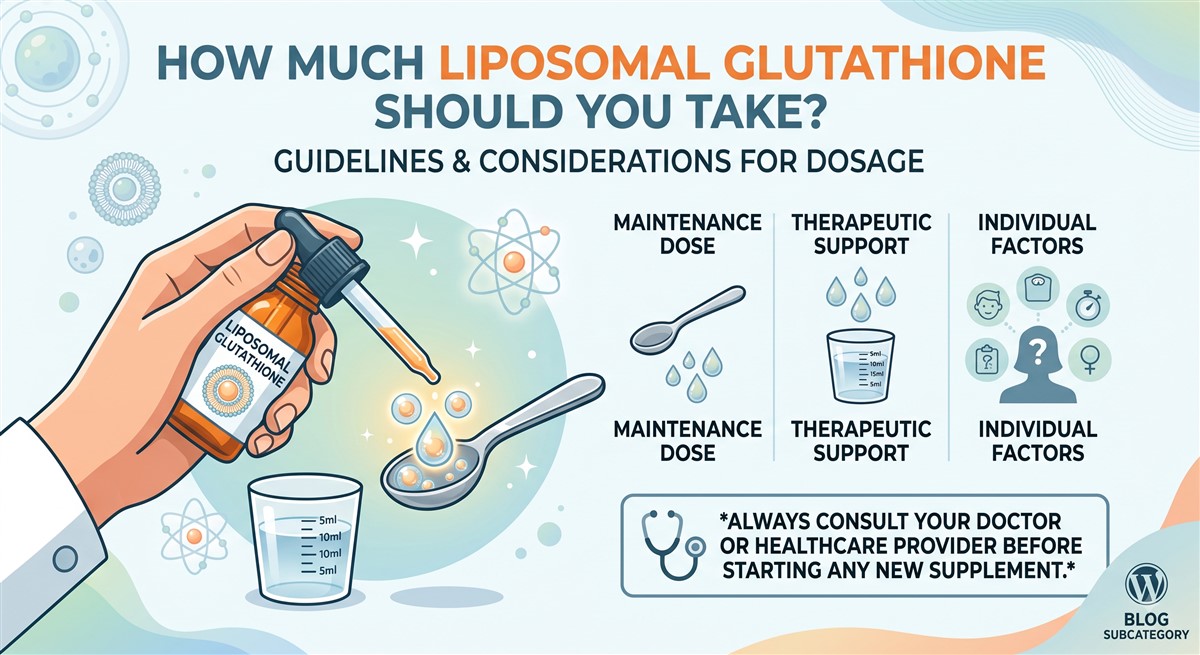
Commercial products may contain 500 mg, 1,000 mg, or another amount per serving. These numbers describe the product; they are not universal recommendations.
Current research does not establish one ideal liposomal glutathione dose for all adults. The small pilot tested 500 mg and 1,000 mg daily, but the researchers did not design it to prove that one dose was best or that a lower liposomal dose outperformed a higher conventional dose.2
Comparing milligram amounts across unrelated studies or products can also be misleading. The formulation, study population, length of use, starting glutathione status, and measured outcomes may all differ.
Follow the finished product’s label and speak with a qualified healthcare professional when appropriate, particularly if you take medication, have a medical condition, are pregnant or nursing, or plan to use the product for an extended period. More glutathione per serving does not automatically mean more benefit.
How Should You Use a Liposomal Glutathione Product?
The product label should be the main source of instructions. Research does not show that every liposomal formulation works equally well with or without food, that morning and evening use are interchangeable, or that regular use maintains a particular “steady” glutathione level.
Practical details can vary by product. Liquids may require refrigeration or protection from heat and light. Flavorings, preservatives, packaging, and phospholipid sources may also affect storage and use. Follow verified directions and do not use a product beyond its stated shelf life.
There is no universal, evidence-based titration schedule for liposomal glutathione. Do not treat generic advice to “start low and increase” as personalized medical guidance. If you experience an unexpected reaction, stop using the product and seek qualified advice.
What Should You Look for in a Product?
Marketing words such as “advanced,” “high potency,” and “maximum absorption” do not establish product quality. Useful information is more specific.
Look for a clear amount of reduced glutathione per serving, a complete ingredient list, the phospholipid source, batch identification, storage directions, an expiration or best-before date, and accessible testing information.
If a company reports particle size, encapsulation efficiency, stability, purity, or absorption, it should explain the measurement method and confirm whether the result applies to the finished product. A certificate of analysis can provide useful information about identity, content, or contaminants, but consumers should check which items the laboratory actually tested.
Supplement manufacturers use both sunflower- and soy-derived phospholipids. Allergies or personal preferences may affect the choice, but the source alone does not prove better absorption. Good finished-product characterization is more meaningful than an unsupported claim that one type of lecithin creates a superior delivery system.
What About Liver Health, “Detox,” and Immune Support?
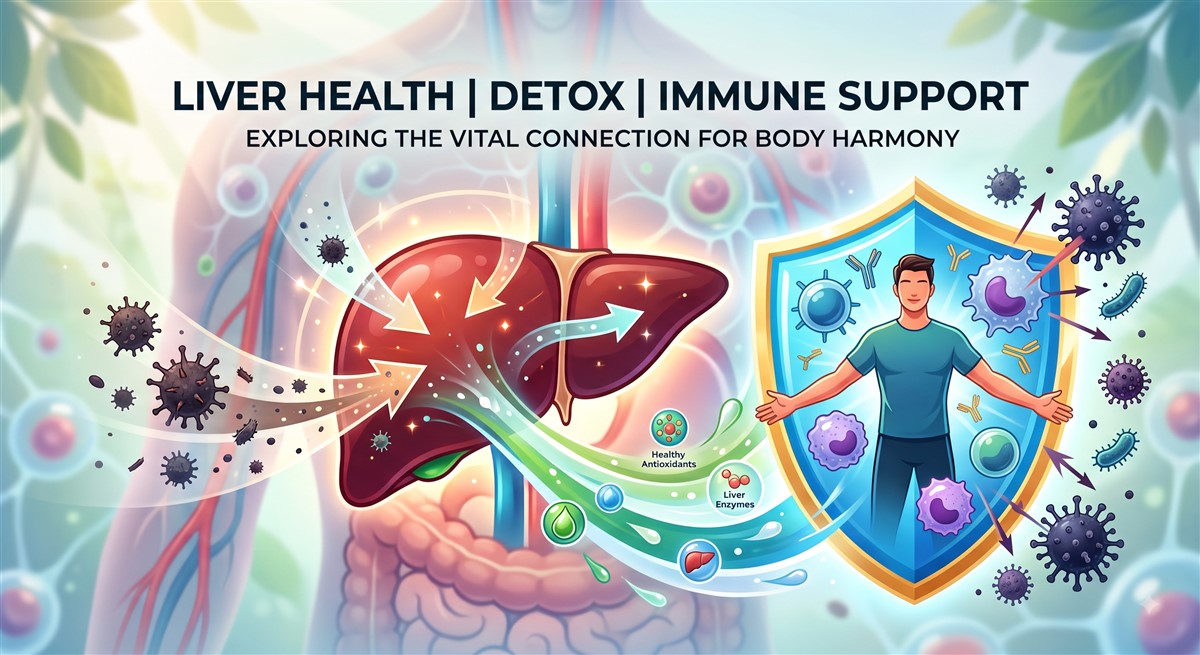
Glutathione participates in normal liver processes, including reactions that help the body handle certain compounds. It also takes part in immune regulation.1
These established functions do not prove that an oral supplement “detoxifies the liver,” removes undefined toxins, or boosts immunity. A 2023 review discussed glutathione’s importance in liver physiology while describing therapeutic evidence in areas such as metabolic liver disease as limited.1
A molecule can be essential to normal liver function without a supplement containing that molecule treating liver disease. People with liver disease, immune disorders, persistent symptoms, or abnormal laboratory results should seek clinical care. Liposomal glutathione should not replace diagnosis, prescribed treatment, or medical monitoring.
Can Lifestyle Support the Body’s Own Glutathione System?
Food supplies the amino acids and other nutrients the body uses to make glutathione. Adequate nutrition, sleep, physical activity, and avoiding harmful exposures are reasonable general health practices.
Marketers should not, however, present them as a proven protocol for “maximizing” the effects of a liposomal supplement. Glutathione works within a much larger antioxidant and metabolic system. The fact that nutrients interact biologically does not prove that combining several supplements creates synergy or better results.
Claims for a multi-ingredient formula require evidence for the actual combination, dose, and intended outcome. A longer ingredient list or more complicated routine is not necessarily more effective.
Who Should Be Especially Cautious?
Interest in glutathione is common among older adults and people concerned about oxidative stress. These are broad groups, and the presence of oxidative stress in a biological process does not show that an antioxidant supplement will improve the relevant health outcome.
Researchers are studying age-related changes in glutathione biology, but current findings do not establish that all older adults are deficient or that liposomal glutathione promotes “healthy aging.” Researchers and consumers also cannot automatically apply evidence from healthy adults to children, pregnant or nursing people, those taking medication, or people with medical conditions.
Anyone in these groups should obtain professional guidance before use. A healthcare professional can help assess whether supplementation is appropriate and consider potential interactions or contraindications.
What Does Research Say About Safety?
Available research is too small and too short to support a universal claim that liposomal glutathione rarely causes adverse effects or that long-term use has a firmly established safety profile. Small studies may not detect uncommon or delayed reactions.2 4
Oral, liposomal, inhaled, topical, and intravenous glutathione are not interchangeable. Do not automatically transfer a safety concern from one route to another, and do not use intravenous evidence to promote an oral supplement.4
Review the entire ingredient list. A phospholipid, flavoring, preservative, or another component could cause a reaction rather than glutathione itself. Stop use and seek qualified advice if an unexpected reaction occurs.
Do Glutathione and Cannabinoids Work Together?
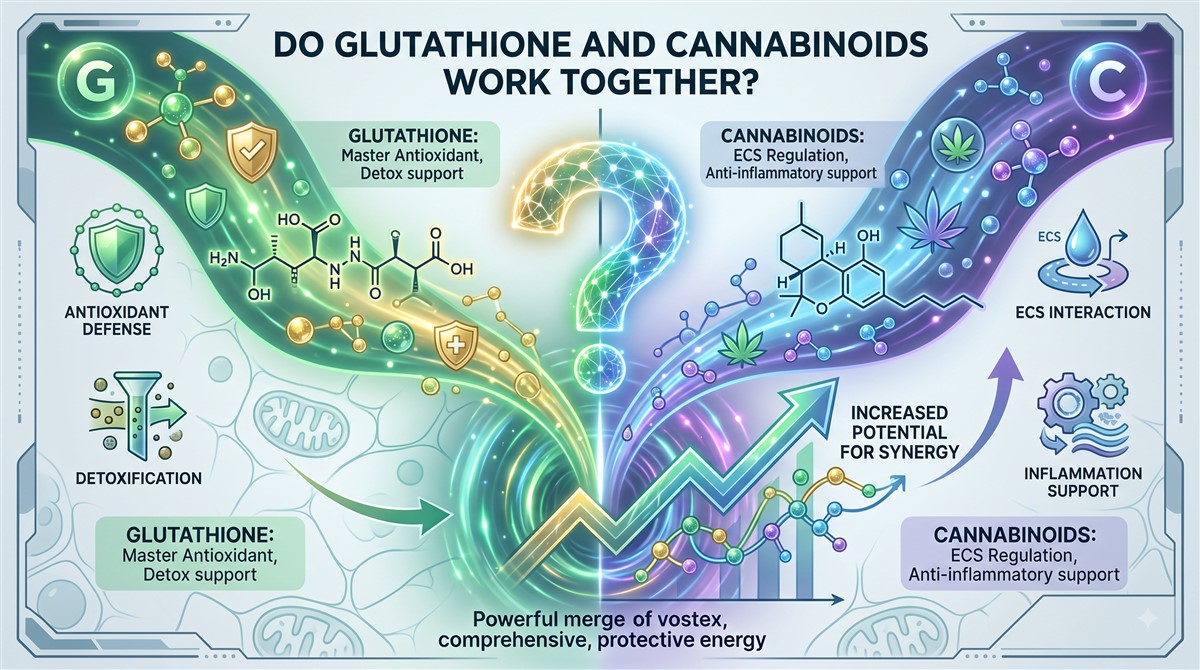
Glutathione and cannabinoids such as CBD and CBG are different compounds with different biological roles and evidence. Research on glutathione does not prove anything about a cannabinoid product, and cannabinoid research does not establish the effects of glutathione.
Their relevant connection here is formulation technology. A manufacturer can apply phospholipid-based methods to many ingredients, but every finished product requires its own evaluation. Sharing a delivery method does not establish synergy, complementary effects, or a reason to take products together.
The cannabinoid and NAD+ links later in this article serve as related formulation examples. They are not scientific evidence for glutathione claims.
What Research Is Still Needed?
Future studies can examine whether particle size, phospholipid composition, encapsulation, and stability meaningfully affect human exposure. More importantly, researchers need to determine whether changes in blood glutathione lead to reproducible cellular or clinical benefits.
Independent organizations should fund the strongest future studies, and researchers should enroll enough participants to produce adequate statistical power. They would randomly assign participants, characterize the products they test, include placebo and non-liposomal comparison groups, define outcomes in advance, report adverse events, and last long enough to evaluate durability and safety.
Combination products and targeted delivery remain legitimate research areas, but companies should describe them as possibilities—not established advantages of supplements currently on the market.
How to Make an Informed Choice
When comparing glutathione products, consider the amount per serving, complete ingredient list, phospholipid source, storage needs, available testing, company transparency, cost, and evidence for the finished formulation.
The research is not a simple contest between an ineffective traditional product and an effective liposomal one. Conventional oral glutathione increased measured body stores in a randomized controlled trial. One small liposomal pilot also reported changes in glutathione compartments and selected biomarkers. Neither study established a general clinical benefit.2 3
Be cautious with testimonials, undefined “detox” language, guaranteed absorption percentages, claims of direct cellular delivery, and promises based only on a high dose. Reliable communication tells you which formulation researchers tested, who participated, how long the study lasted, and what researchers actually measured.
Conclusion
Glutathione is a naturally produced tripeptide with important roles in redox balance, the processing of certain compounds, and immune regulation. Those established functions explain why researchers study supplementation, but they do not prove that an oral product treats a condition or improves general health.1
Human research shows that oral supplementation can affect measured glutathione status under some conditions. A randomized controlled trial reported increases after conventional oral glutathione. A small, manufacturer-funded pilot reported increases after one specific liposomal formulation. Because the liposomal study was short, small, lacked placebo and active comparison groups, and tested only one product, it cannot establish superiority or clinical benefit.2 3
Consumers can therefore consider liposomal glutathione an alternative delivery format with preliminary, formulation-specific evidence. It is not a substitute for a balanced diet, medical care, or evidence-based treatment. Follow the product label and seek professional guidance when your health, medication, pregnancy status, or intended duration of use makes that appropriate.
Related Hemp Therapies Formulations
The following pages show how Hemp Therapies uses liposomal or phospholipid-based formulation methods with other compounds. They do not show that glutathione, cannabinoids, or NAD+ have combined, complementary, or synergistic health effects.
Readers who want to compare how Hemp Therapies adapts a similar delivery approach to a cannabinoid can review the ingredients, strength, directions, and available testing for the 9000mg Liposomal CBG Oil.
To browse other phospholipid-based formats, visit the liposomal products collection. Readers should evaluate each product on its own formulation, testing, and intended use.
Readers researching cannabinoid extract types can also explore the Full Spectrum CBD collection. We include this link for navigation only; it does not support a glutathione claim.
For another educational discussion of a nutrient-related compound formulated with liposomal technology, see the Liposomal NAD+ guide. Do not transfer evidence about NAD+ precursors or delivery to glutathione.
For finished-product details on ingredients, strength, directions, and testing, see the 9000mg Liposomal Full Spectrum CBD Oil. Its inclusion reflects a shared formulation approach, not evidence that consumers should combine the products or expect related effects.
References
- Glutathione: Pharmacological Aspects and Implications for Clinical Use — Frontiers in Medicine (2023)
- Sinha et al. — Oral Supplementation with Liposomal Glutathione Elevates Body Stores of Glutathione and Markers of Immune Function
- Richie et al. — Randomized Controlled Trial of Oral Glutathione Supplementation on Body Stores of Glutathione
- Review of Glutathione Efficacy and Safety Evidence
- U.S. Food and Drug Administration — Structure/Function and Related Claims in Dietary Supplement Labeling
The information provided on this website is for educational and informational purposes only and is not intended as medical advice. Statements regarding dietary supplements and CBD products have not been evaluated by the U.S. Food and Drug Administration (FDA). Products sold on this website are not intended to diagnose, treat, cure, or prevent any disease. Always consult a qualified healthcare professional before using any dietary supplement or CBD product, especially if you are pregnant, nursing, taking medication, or have a medical condition.