


NAD+ has become one of the most discussed topics in the supplement industry. Liposomal technology is often mentioned alongside it. If you have been researching NAD supplements, you have probably run into terms like liposomal delivery, encapsulation, and bioavailability. However, clear explanations of what these terms actually mean are hard to find.
This guide breaks down liposomal NAD+ in plain language. It covers what NAD+ is, how liposomal delivery systems work, and what to consider when comparing products. At Hemp Therapies, we want to help you make informed decisions about NAD+ by starting with the fundamentals.
What Is NAD+?
NAD+, short for nicotinamide adenine dinucleotide, is a vital coenzyme that every cell in the human body contains. It plays a key role in cellular energy production. In addition, it participates in hundreds of metabolic reactions that keep cells running smoothly.
Picture NAD+ as a molecule that shuttles electrons between chemical reactions inside your cells. Without it, basic cellular function and energy metabolism cannot take place. As people age, natural NAD+ levels tend to decline. This decline is part of why interest in NAD supplements has grown so much in recent years.
Why Cellular Energy Matters
Every cell in the body depends on a steady supply of energy to function. Mitochondrial function — the process cells use to convert nutrients into usable energy — relies heavily on coenzymes like NAD+. As a result, cellular health and longevity researchers keep returning to NAD+ as a focal point.
Common Ways People Try to Raise NAD+ Levels
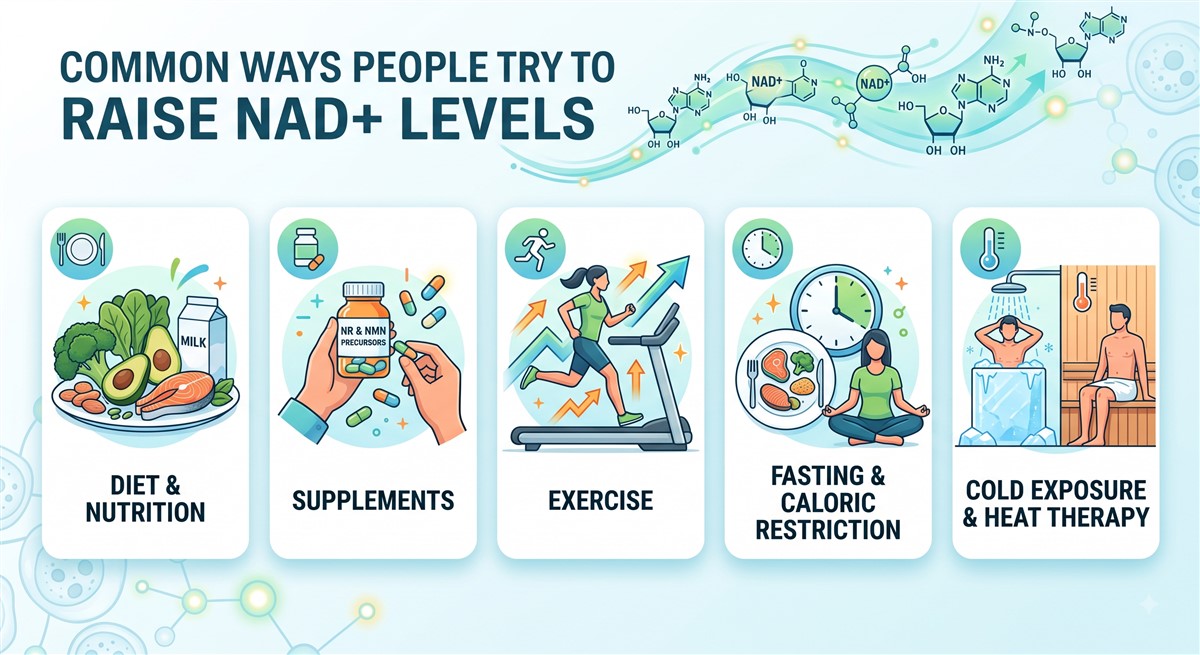
There are several approaches associated with efforts to increase NAD+ or support the body’s own production of it:
- Direct NAD+ supplements — oral products containing the NAD+ molecule itself
- NR (nicotinamide riboside) — a precursor compound the body converts into NAD+
- NMN (nicotinamide mononucleotide) — another precursor used in many longevity-focused formulas
- IV NAD+ treatments — administered directly into the bloodstream in clinical settings
Each delivery method has a different absorption pathway. This is where liposomal technology becomes relevant.
The Problem With Liposomal NAD+ Absorption
Oral NAD+ supplements face a common obstacle: the digestive system. As NAD+ or its precursors like NR and NMN move through the digestive tract, stomach acid and digestive enzymes break down a portion of the active ingredient. As a result, some of the compound never reaches the bloodstream.
This is a well-known challenge across the supplement industry. Standard NAD+ capsules and tablets need to survive digestion largely intact in order for the body to absorb them effectively. However, older delivery systems do not always accomplish this efficiently.
What Is Liposomal Technology?
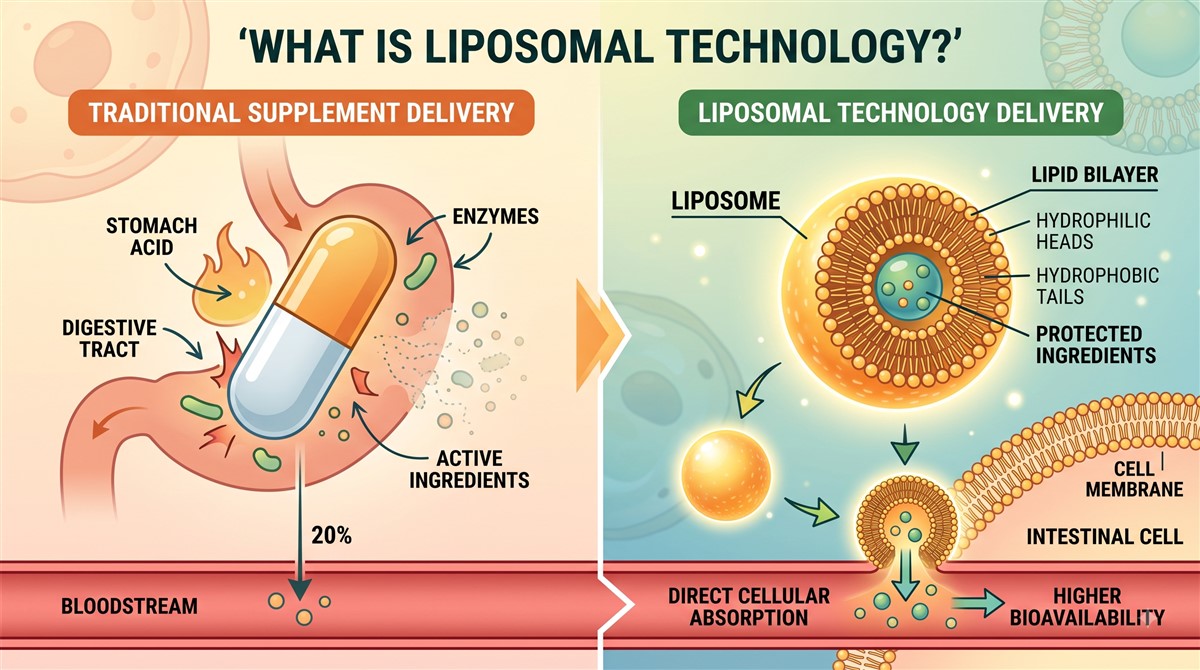
Liposomal delivery is one method developed to address this absorption challenge. In simple terms, liposomal encapsulation surrounds an active ingredient in a lipid-based structure called a liposome.
A liposome uses a lipid layer that resembles the structure of a natural cell membrane. Manufacturers design this liposomal structure to surround the NAD+ molecule as it moves through the digestive system. It is intended to help protect the molecule during digestion.
How the Liposomal Structure Works
Here is a simple way to picture it: imagine wrapping a fragile package in protective material before shipping it through a rough environment. A liposome follows a similar design concept. It encapsulates NAD+ with the aim of helping protect the molecule during digestion.
The liposomal structure shares similarities with a cell membrane. This structural similarity forms part of the rationale behind liposomal delivery, although actual behavior depends on the specific formulation. This is the basic idea behind liposomal formulations. Furthermore, manufacturers use the same principle with active ingredients other than NAD+.
Liposomal encapsulation isn’t limited to NAD+. Manufacturers also apply lipid-based delivery approaches to other active compounds. Our full spectrum cbd oil uses the same lipid-based delivery approach.
Related products that use liposomal delivery include our 9000mg Liposomal CBG Oil and our 9000mg Liposomal Full Spectrum CBD Oil. Both use a lipid-based delivery approach.
Liposomal NAD+ vs. Standard NAD+ Supplements
When comparing liposomal supplements to standard formulations, a few differences tend to stand out.
A standard NAD+ supplement typically comes in an uncoated capsule or tablet. This means the active ingredient faces full exposure to stomach acid during digestion. As a result, its structural integrity is more likely to diminish before the body absorbs it. These formulations also tend to be simpler in design.
A liposomal NAD+ supplement, by contrast, relies on lipid-based encapsulation. Manufacturers design this structure to surround the active ingredient as it moves through the digestive tract. The barrier is intended to help protect the compound during digestion. These products therefore use a different formulation approach from standard capsules.
This comparison is not meant to declare one method universally superior. It simply highlights the different engineering approaches used to address absorption and bioavailability. This applies to NAD+, NR, and NMN alike.
Understanding Liposomal Delivery
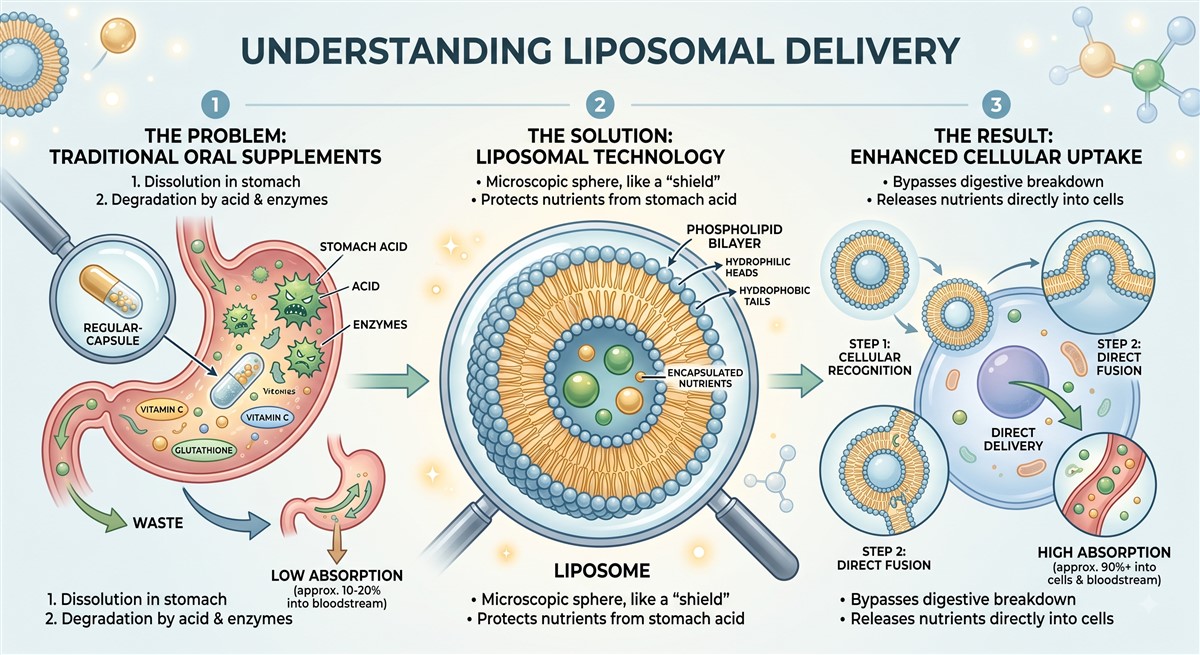
Learning how liposomal delivery works can help you evaluate NAD supplements more critically. The following points may help:
- Recognizing why some liposomal products emphasize third-party testing and formulation transparency
- Understanding the distinction between direct NAD+ and precursor compounds like NR and NMN
- Making more informed comparisons between oral NAD supplementation and IV NAD treatments
- Knowing what “liposomal” actually refers to on a product label, rather than treating it as a marketing buzzword
Ingredients Often Paired With Liposomal NAD+
Many liposomal NAD supplements do not rely on NAD+ alone. Formulators frequently combine it with complementary ingredients, including:
- Resveratrol — a compound often paired with NAD supplements in longevity-focused formulas Antioxidant support is a common theme in longevity supplementation — if you are exploring this area, our Liposomal Vitamin C and Antioxidant Supplementation Guide covers how liposomal delivery applies to one of the most studied antioxidants.
- NMN and NR — precursor compounds that work alongside direct NAD+ to support the body’s own natural production pathways
- Additional coenzymes — cofactors involved in broader metabolic function and energy metabolism
Understanding NAD+ within the context of a full formulation provides a clearer picture of how these products are designed. In addition, it helps you avoid evaluating NAD+ as a single isolated ingredient.
What to Look for When Choosing a Liposomal Supplement
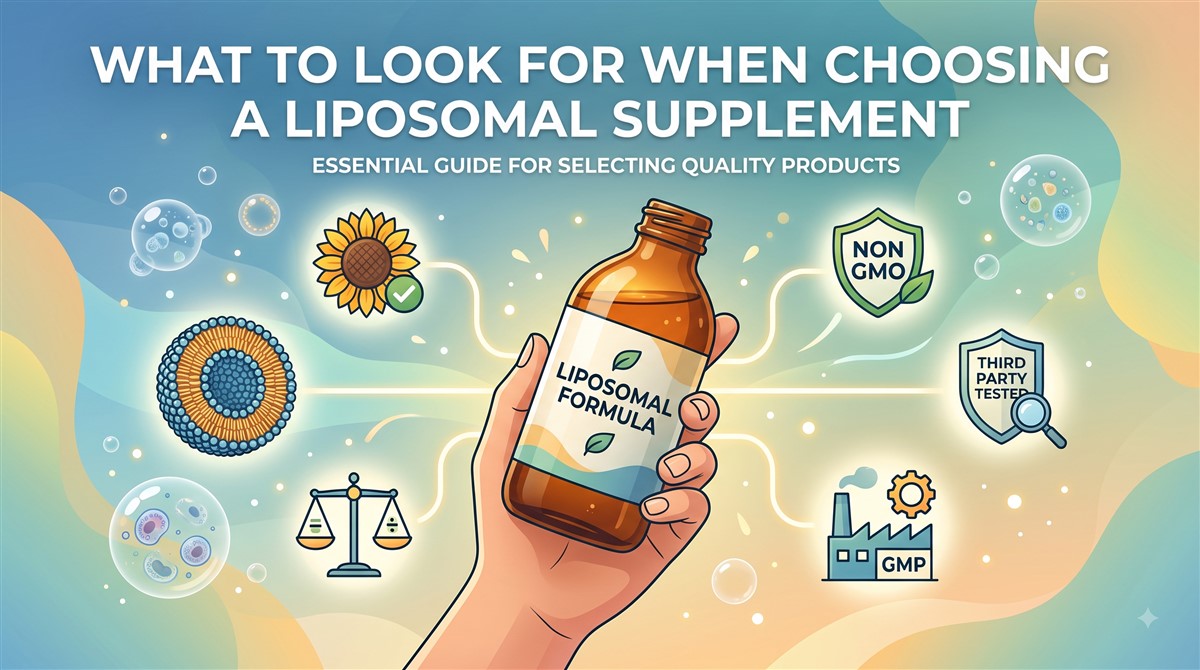
If you are evaluating liposomal NAD products, here are a few practical factors to consider:
- Third-party testing — look for products verified by independent labs or certifications such as NSF, which can help confirm label accuracy
- Ingredient transparency — clear labeling of NAD+ concentration, along with any NR, NMN, or resveratrol content
- Manufacturing standards — products made in facilities that follow established quality protocols
- Formulation details — whether the liposomal technology used is genuine lipid-based encapsulation, or simply a marketing term applied loosely
Speaking with a healthcare professional before starting any new supplement routine is always a reasonable step. This is particularly true if you take medications or manage existing conditions.
Reading Customer Reviews Thoughtfully
Customer reviews can offer insight into a product’s taste, texture, and overall user experience. However, they should not be the sole basis for judging a supplement’s formulation quality. Look for detailed reviews that mention specifics about the liposomal structure, packaging integrity, or third-party testing documentation. In contrast, avoid placing too much weight on vague generalizations about how a product made someone feel.
The Growing Interest in Cellular Health and Longevity
Public interest in cellular health and longevity has expanded rapidly over the last several years. NAD+ sits directly at the intersection of both topics. As research into cellular function, DNA repair processes, and energy metabolism continues, formulation science is likely to keep evolving. This includes liposomal delivery systems.
Clinical studies examining NAD+ and its various delivery methods are ongoing. Furthermore, the supplement industry continues to refine how manufacturers produce and test these products. Some researchers have also looked at connections between NAD+ and healthy aging. However, this remains an active and developing area of study.
Frequently Asked Questions
What does “liposomal” mean in a supplement?
It refers to a delivery method in which the active ingredient, such as NAD+, gets encapsulated in a lipid-based structure. Manufacturers design this structure to help protect the ingredient during digestion.
Is liposomal NAD+ the same as IV NAD+?
No. A clinician administers IV NAD+ directly into the bloodstream in a clinical setting. In contrast, liposomal NAD+ is an oral supplement. It uses an alternate absorption approach compared to standard capsules.
Do NR and NMN work the same way as direct NAD+ supplements?
NR and NMN are precursor compounds. The body converts them into NAD+. In contrast, direct NAD+ supplements contain the molecule itself. Furthermore, liposomal encapsulation can apply to any of these formats.
Is there a single best way to boost NAD+ naturally?
There is not one universal answer. People explore diet, lifestyle factors, and supplementation differently. As a result, what works for supporting NAD+ levels naturally varies from person to person.
Conclusion
Liposomal NAD+ supplementation represents one approach among several within the broader supplement industry. It uses lipid-based encapsulation as a design approach intended to address the natural challenges of digestion. Whether you are new to NAD+, NR, or NMN, understanding how manufacturers design these delivery systems can help you make more informed decisions. As a result, you can choose the formulation that best fits your needs.
At Hemp Therapies, we are committed to providing clear, factual information about supplement science. Therefore, you can approach your options with confidence. As always, consult a healthcare professional before adding any new supplement to your routine.
Related Hemp Therapies Formulations
The following pages show how Hemp Therapies uses phospholipid-based formulation methods with other compounds. They are commercial product or collection pages, not evidence of combined effects with NAD+.
Readers who want to see how this formulation approach is used with a cannabinoid can review the ingredients, strength, directions, and available testing for 9000mg Liposomal CBN Oil.
For a cannabinoid formulation with ND THC, the 9000mg Liposomal Broad Spectrum CBD Oil product page provides product-specific ingredients, strength, and testing information. This link is included as a related formulation example, not as evidence that CBD and vitamin C have a combined effect.
To compare the liposomal formats currently offered by Hemp Therapies, visit the liposomal products collection. Each product should be evaluated on its own formulation, testing, and intended use. Evidence about vitamin C should not be assumed to apply to cannabinoids.
Educational and Regulatory Disclaimer
This article is for educational and informational purposes only and is not medical advice. It does not recommend a dose or claim that a dietary supplement or CBD product diagnoses, treats, cures, mitigates, or prevents any disease. Dietary-supplement structure/function and general-well-being claims must be truthful, non-misleading, and substantiated; a disclaimer does not replace adequate evidence.3 Consult a qualified healthcare professional before using a dietary supplement, especially if you are pregnant or nursing, take medication, have a medical condition, or are considering a high dose.
These statements have not been evaluated by the Food and Drug Administration. This product is not intended to diagnose, treat, cure, or prevent any disease.